Therapies

What is CAR T - cell Therapy?

CAR T (Chimeric Antigen Receptor T ‐ cell) therapy is a revolutionary cancer treatment that uses a patient’s own immune cells or donor cells to fight cancer.

How does CAR T - cell Therapy work?

  1. Collection: T ‐ cells are collected either from the patient’s blood through leukapheresis (Autologous CAR T) or sourced from a healthy donor (Allogeneic CAR T).
  2. Modification: The collected T ‐ cells are genetically engineered in a laboratory to express Chimeric Antigen Receptors (CARs) on their surface, enhancing their ability to target cancer cells.
  3. Expansion: The modified T ‐ cells are expanded in number to increase their effectiveness. In Autologous CAR T, this occurs using the patient’s own cells, while in Allogeneic CAR T, pre-manufactured donor cells are expanded.
  4. Infusion: The CAR T ‐ cells are infused into the patient’s bloodstream. For Autologous CAR T, this occurs after the patient undergoes conditioning therapy, while Allogeneic CAR T may be available for immediate infusion.
  5. Targeting Cancer: These engineered CAR T ‐ cells recognize and attack cancer cells throughout the body, helping eliminate tumors and improve patient outcomes.

Autologous CAR T - cell Therapy

  1. Source: Uses the patient’s own T ‐ cells
  2. Availability; Requires weeks to modify and expand cells
  3. Risk of Rejection: Lower risk (cells from self)
  4. Cost: Higher due to personalization
  5. Suitability: Best for patients who can wait
  6. Procedure: Cells collected from the patient, modified, expanded, and reinfused
  7. Process: Requires patient-specific T ‐ cell collection, genetic modification, and expansion before infusion

Allogeneic CAR T - cell Therapy

  1. Source: Uses donor T-cells (off-the-shelf)
  2. Availability: Readily available, faster treatment
  3. Risk of Rejection: Higher risk (cells from donor)
  4. Cost: Potentially lower due to mass production
  5. Suitability: Ideal for urgent cases or patients with weak immune systems
  6. Procedure: Pre-prepared donor cells infused directly into the patient
  7. Process: Donor-derived CAR-T cells are pre-manufactured and ready for immediate infusion

Benefits

Personalized Treatment : Uses the patient’s own cells, reducing the risk of rejection.

Targeted Action : Specifically designed to attack cancer cells.

Potential for Long-Term Remission : Some patients experience prolonged remission after treatment.
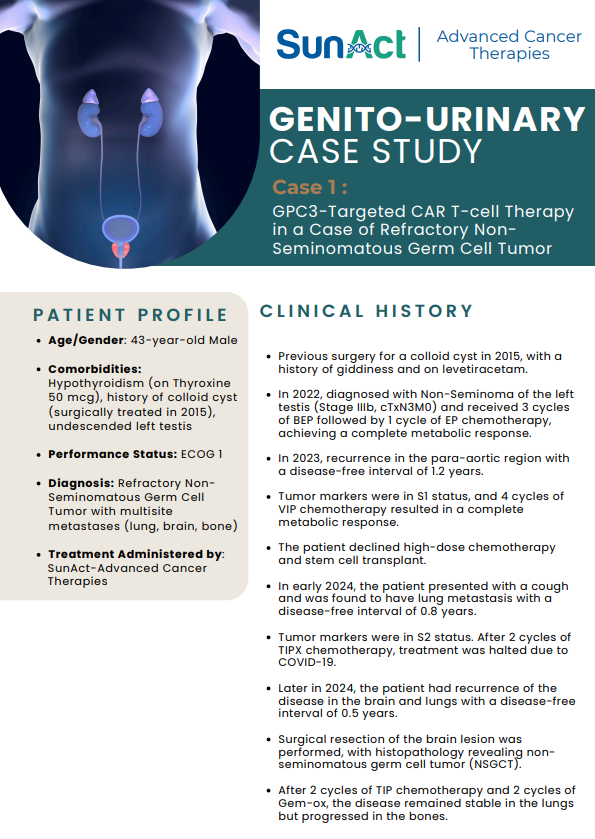
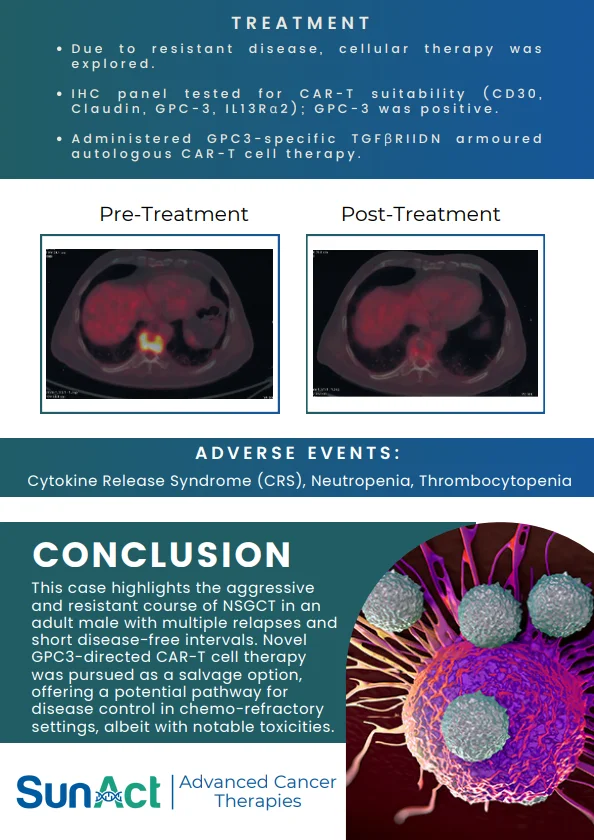
SunAct genitourinary cancer case study on GPC3-targeted CAR T therapy for refractory non-seminomatous germ cell tumor
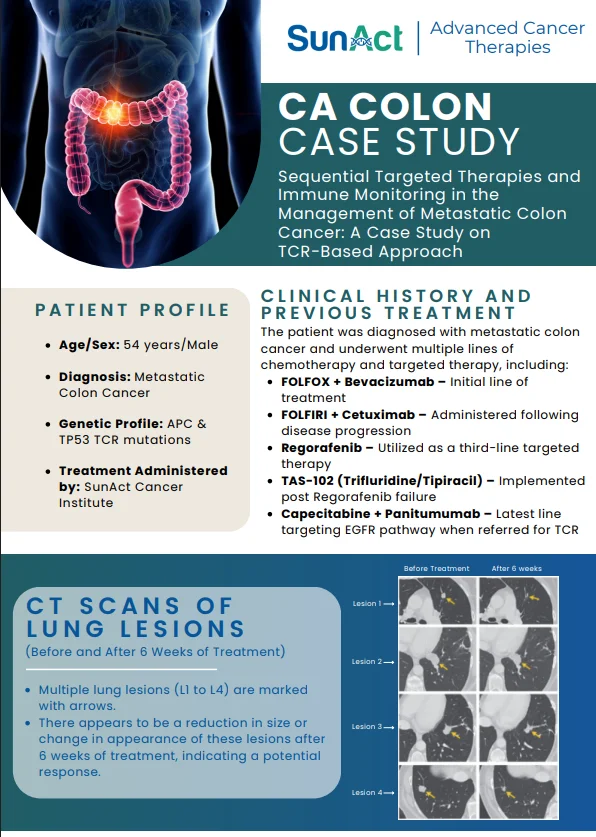
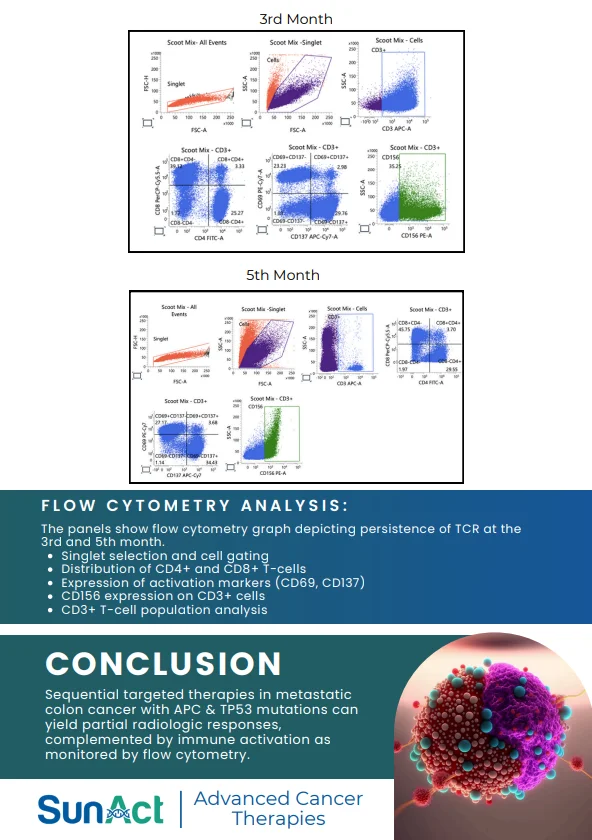
SunAct colon cancer case study highlighting TCR-based approach in metastatic colon cancer with lung lesions
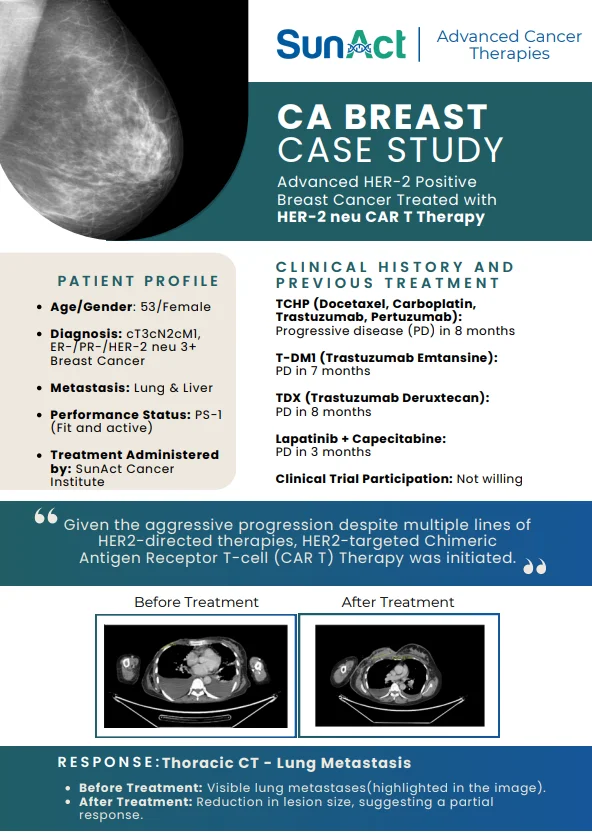
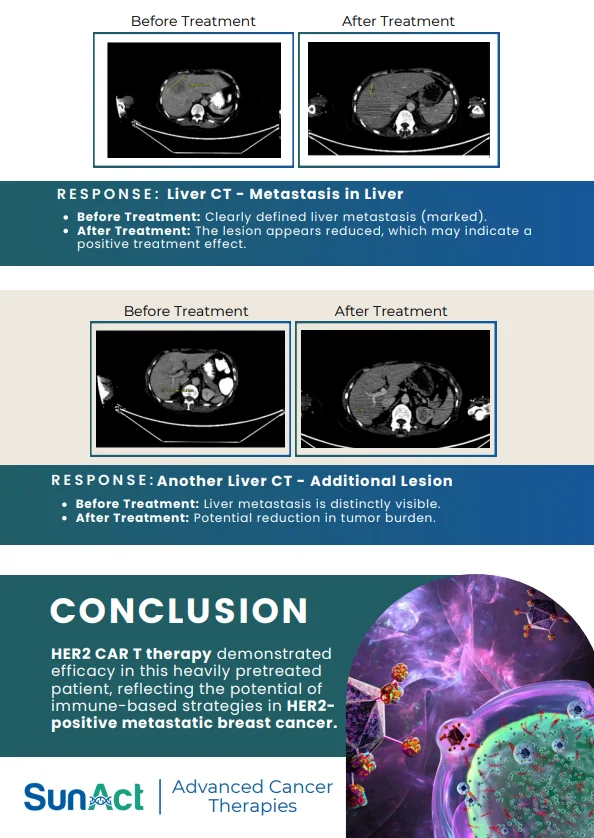
SunAct breast cancer case study showcasing HER2-positive treatment with CAR T-cell therapy
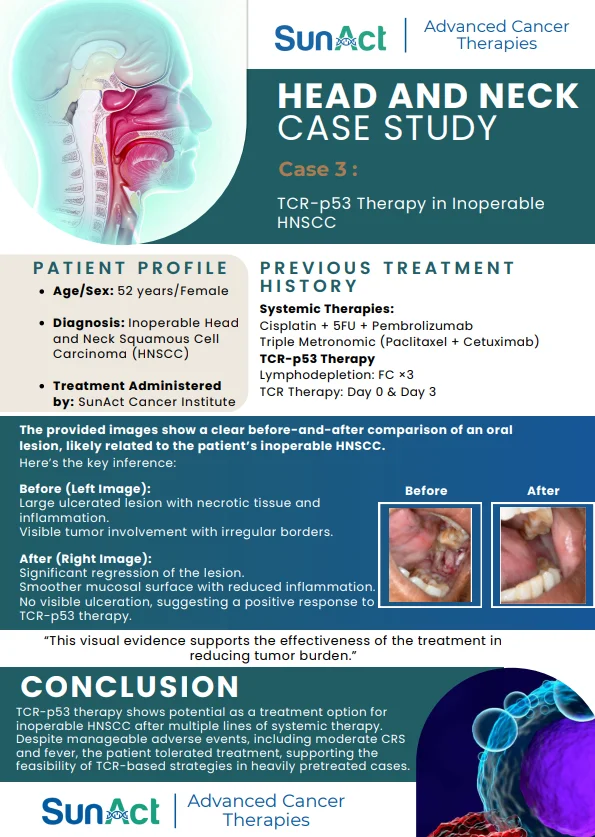
SunAct head and neck cancer case study using TCR-p53 therapy in inoperable squamous cell carcinoma
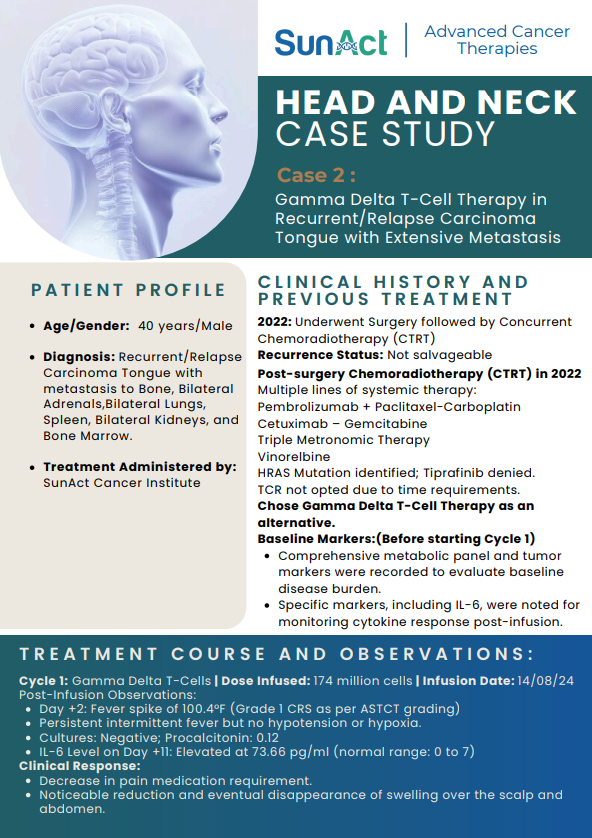
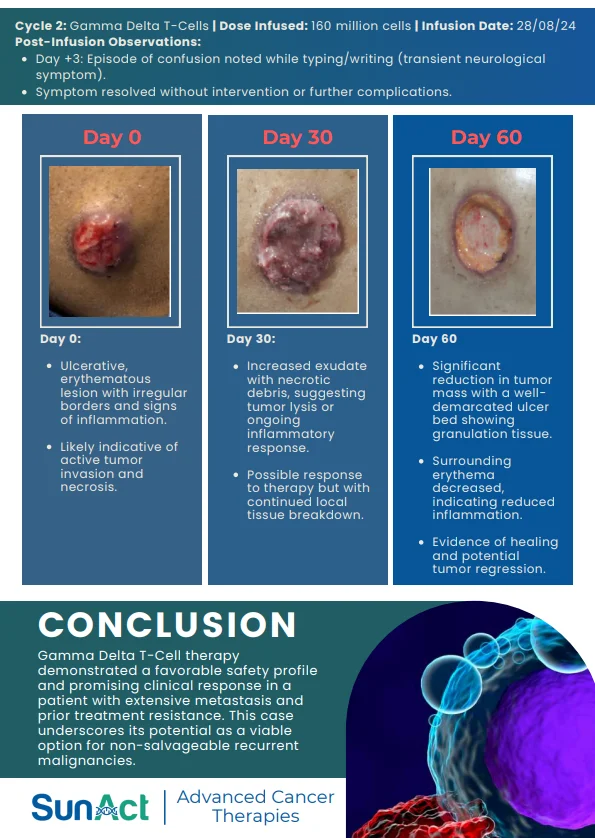
SunAct case study featuring gamma delta T-cell therapy for recurrent tongue carcinoma with extensive metastasis
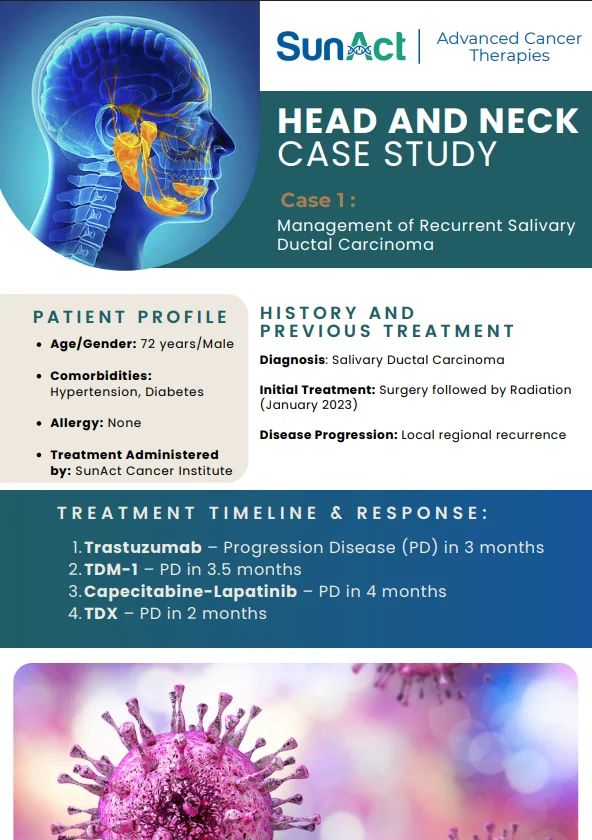
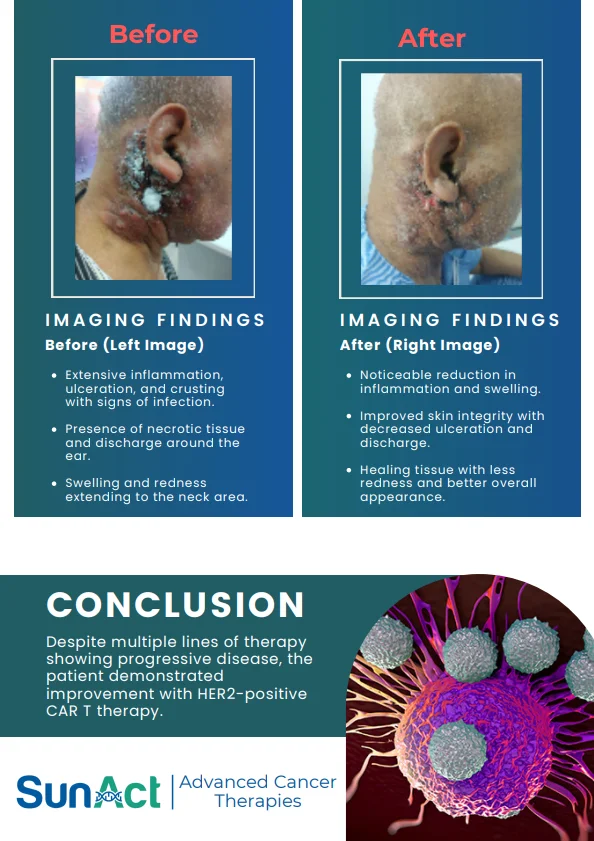
SunAct head and neck cancer case study on salivary ductal carcinoma managed with advanced therapies
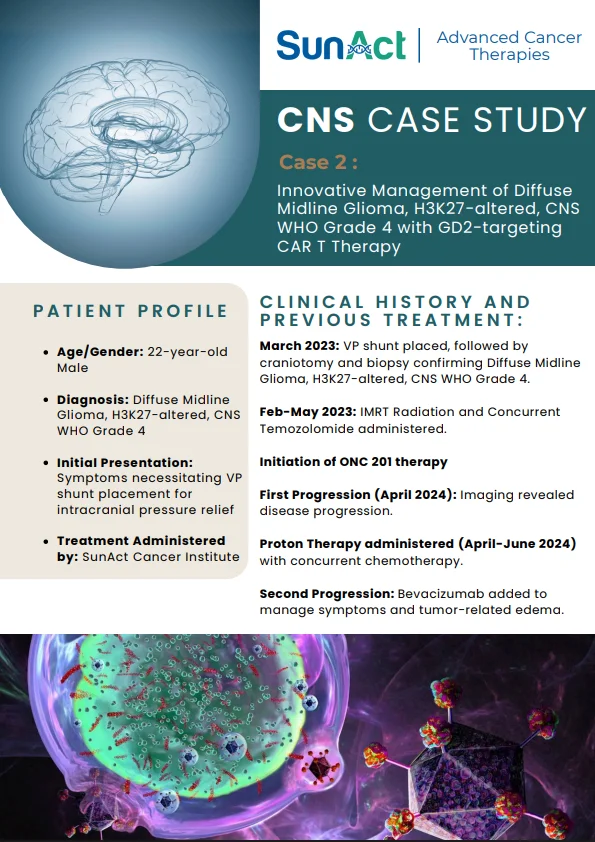
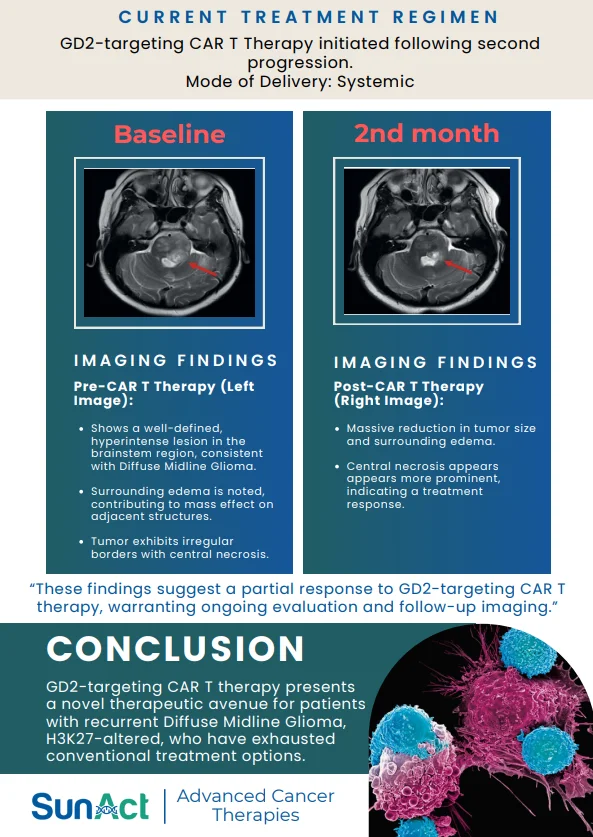
SunAct case study on GD2-targeted CAR T therapy for diffuse midline glioma in a 22-year-old male
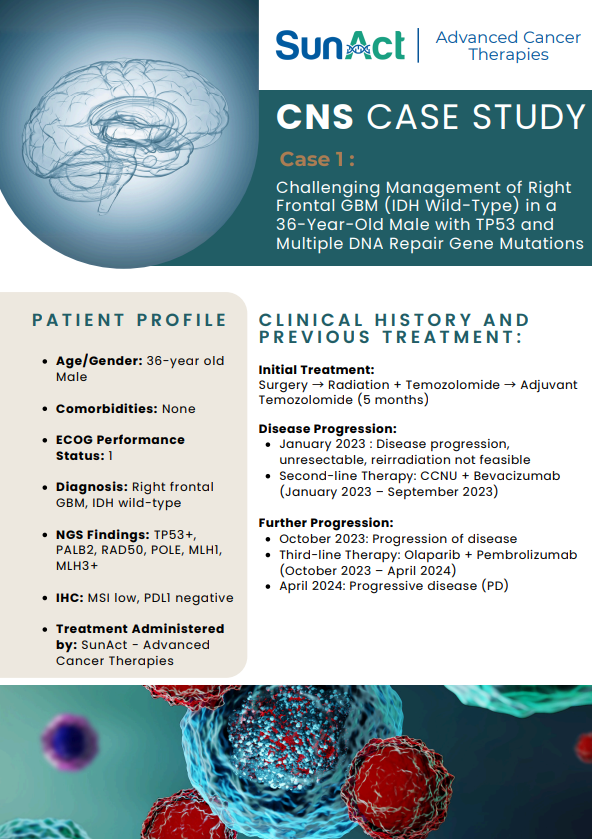
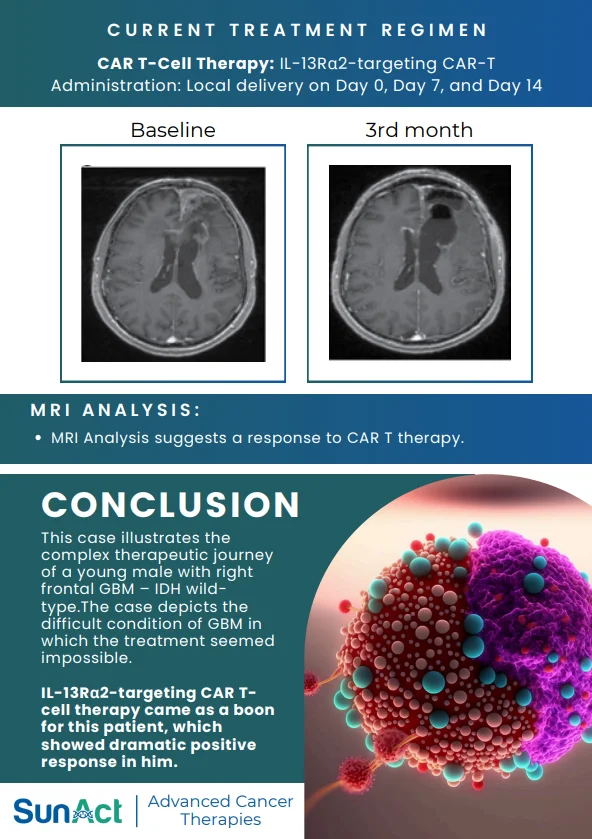
SunAct CNS case study on GBM treatment using multiple gene mutation targeting in a 36-year-old male