18002022232
18002022232

NEXT GENERATION GENOME EDITING | CRISPR-CAS12A SCD TRIAL | LAD-I GENE THERAPY APPROVAL | CML BIOMARKER (BCL-XL
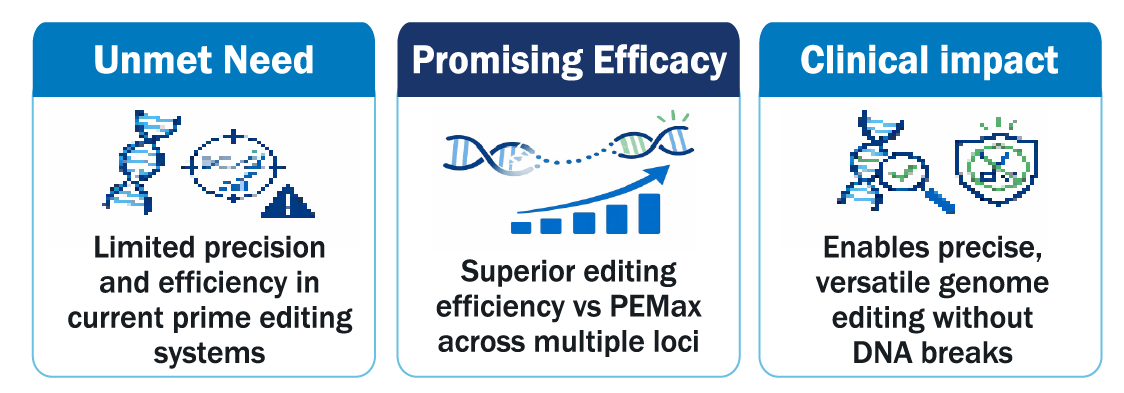
This study presents Chimeric Oligonucleotide-Directed Editing (CODE), a next-generation genome editing platform designed to enhance the efficiency and precision of prime editing. CODE employs engineered nCas9–DNA polymerase fusion proteins with a chimeric pegRNA (cpegRNA) to enable programmable “search-and-replace” editing without inducing double-stranded DNA breaks. It incorporates a modified Sbt DNA polymerase with improved thermostability and processivity, while the advanced CODEMax (exo+) variant adds 5′–3′ exonuclease activity to enhance strand invasion and repair, improving edit incorporation.
Pre-clinically, CODE outperformed PEMax across multiple loci in HEK293T cells, enabling efficient insertions, deletions, and substitutions via plasmid and RNP delivery. CODEMax further demonstrated precise editing in mouse and bovine embryos, achieving efficiencies up to 9.3%, highlighting its potential as a safer, high-precision genome engineering platform.
Reference: Nguyen, L. T. et al., Nature Communications (2026).
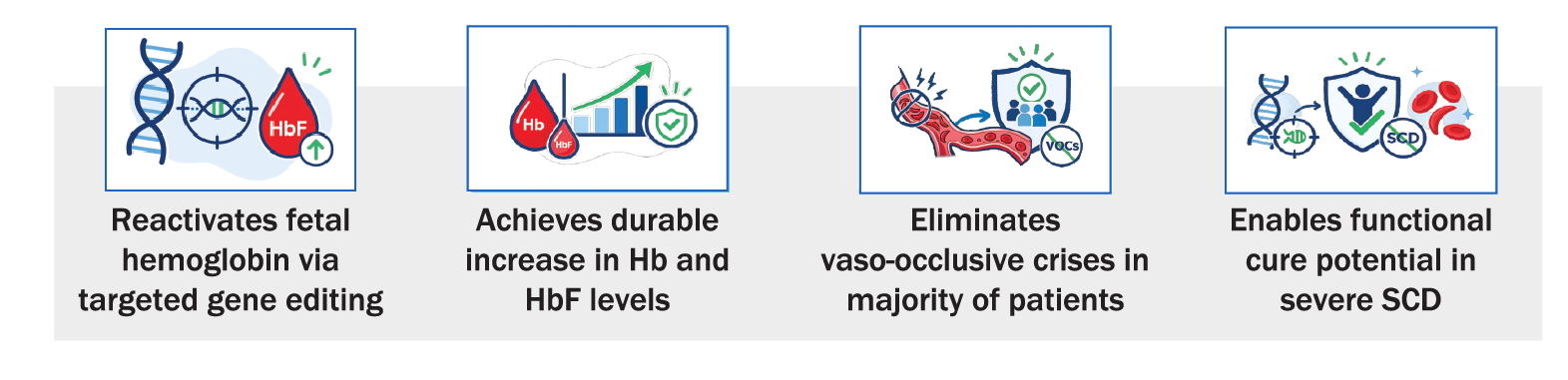
The Phase I/II study evaluated renizgamglogene autogedtemcel (reni-cel), a CRISPR-Cas12a-edited autologous hematopoietic stem cell therapy for severe sickle cell disease (SCD). The approach disrupts BCL11A binding sites in HBG1/HBG2 promoters to reactivate fetal hemoglobin (HbF) production. Preclinical studies confirmed effective HbF restoration via targeted genome editing.
In an ongoing multicenter trial, 28 patients received a single infusion following busulfan conditioning, achieving neutrophil and platelet engraftment at 23 and 25 days. At 6 months, total hemoglobin increased to 13.8 g/dL and HbF to 48.1%. Notably, 27/28 patients remained free of vaso-occlusive events, indicating durable clinical benefit with manageable safety.
These findings support reni-cel as a promising gene-editing therapeutic approach with the potential to provide durable disease modification in patients with severe sickle cell disease.
Reference: Hanna, R. et al., The New England Journal of Medicine (2026), NCT04853576.
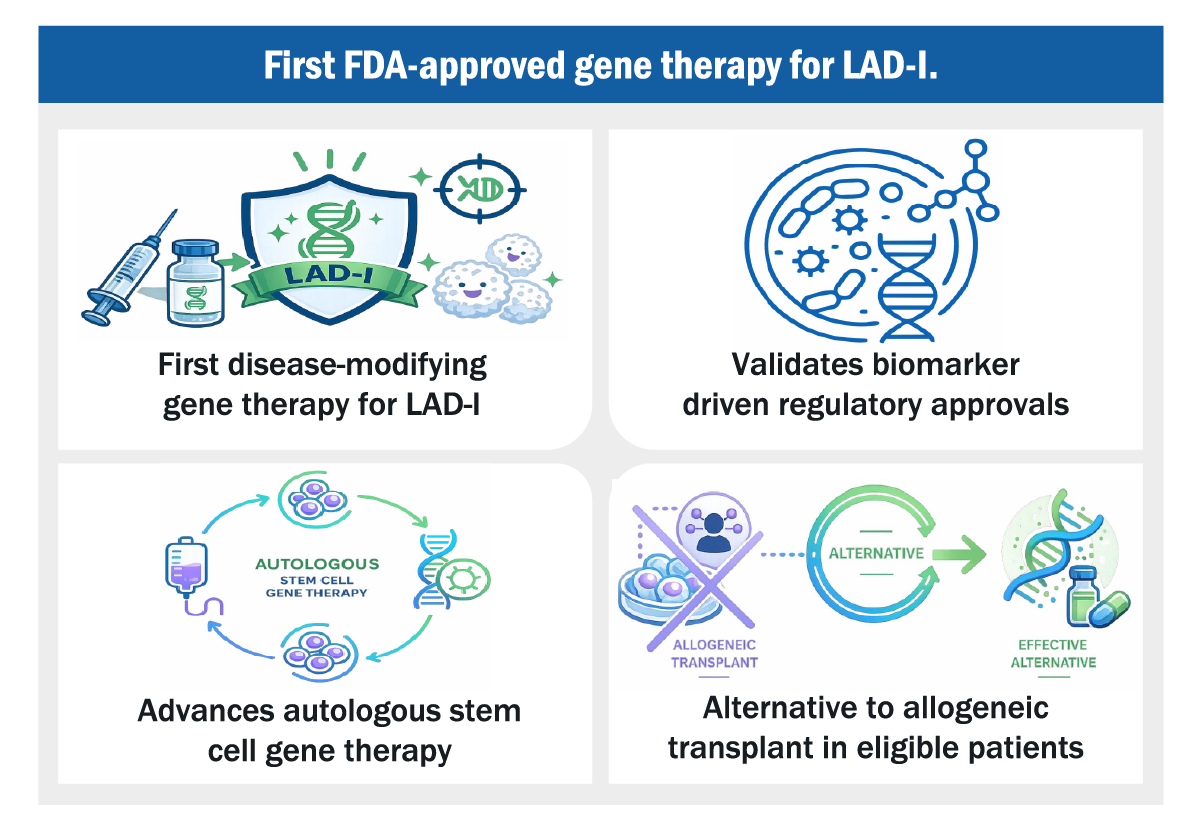
The U.S. FDA has granted accelerated approval to Kresladi (marnetegragene autotemcel), the first gene therapy for pediatric patients with severe Leukocyte Adhesion Deficiency Type I (LAD-I) lacking an HLA-matched sibling donor for stem cell transplantation.
The therapy uses autologous hematopoietic stem cells genetically modified to deliver functional ITGB2 copies, restoring CD18/CD11a expression and improving immune cell function. Approval was supported by an open-label multicenter study demonstrating sustained biomarker correction up to 24 months post-infusion, with manageable safety. Confirmatory post-marketing studies are ongoing.
Reference: FDA News Release, March 26, 2026.
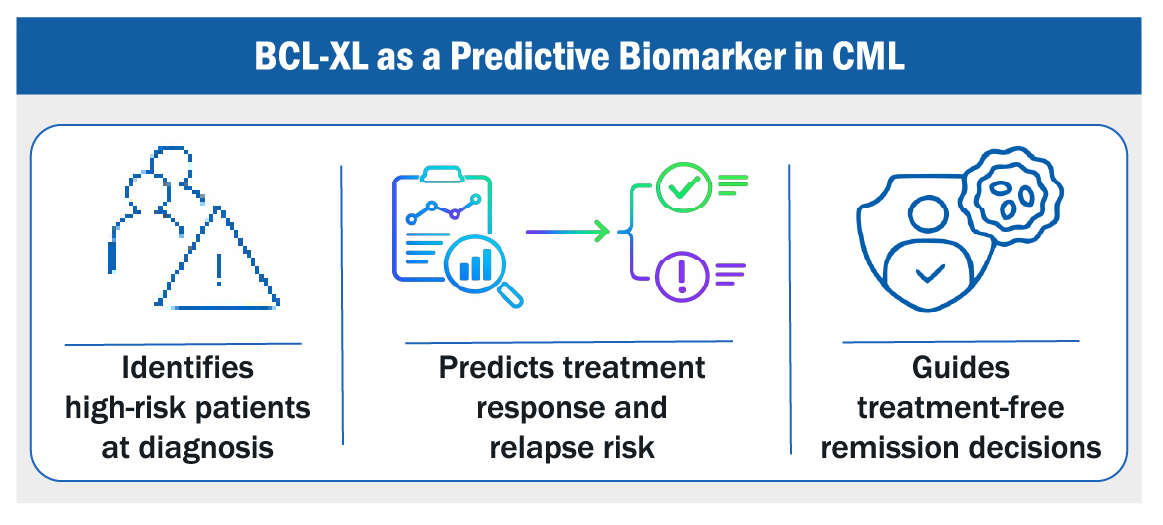
BCL-XL is being explored as a predictive biomarker for disease progression and treatment-free remission (TFR) outcomes in chronic myeloid leukemia (CML). In the SPIRIT-2 trial, elevated BCL-XL expression at diagnosis was associated with treatment failure, suboptimal early molecular response, and lower rates of achieving MR2/MR3 in patients treated with imatinib.
In the DESTINY trial, patients who experienced molecular relapse during treatment de-escalation showed significantly higher BCL-XL levels, detectable 6–8 months prior to relapse. These findings highlight its value as an early predictor of TFR failure and support combining BCL-XL with CIP2A for improved risk stratification in CML.
Reference: Basarabia, A.A. et al., International Journal of Molecular Sciences (2026).

At SunAct, we remain dedicated to tracking and sharing global advances that continue to redefine the landscape of cellular therapy and oncology. Stay tuned for our next edition as we uncover more breakthroughs and emerging trends shaping the future of cancer research.
Disclaimer: This newsletter is intended for healthcare professionals and researchers. Information is for educational purposes only.