4 December 2025
Solid tumors are cancers that form a lump or mass in the body. In children and teenagers, they can arise in many places such as the brain, kidneys, bones, muscles, eyes and other soft tissues.
Their incidence in children is much lesser as compared to adults and are not linked to lifestyle factors like diet, habits etc. Lets unravel a few important facts on solid tumors in children.
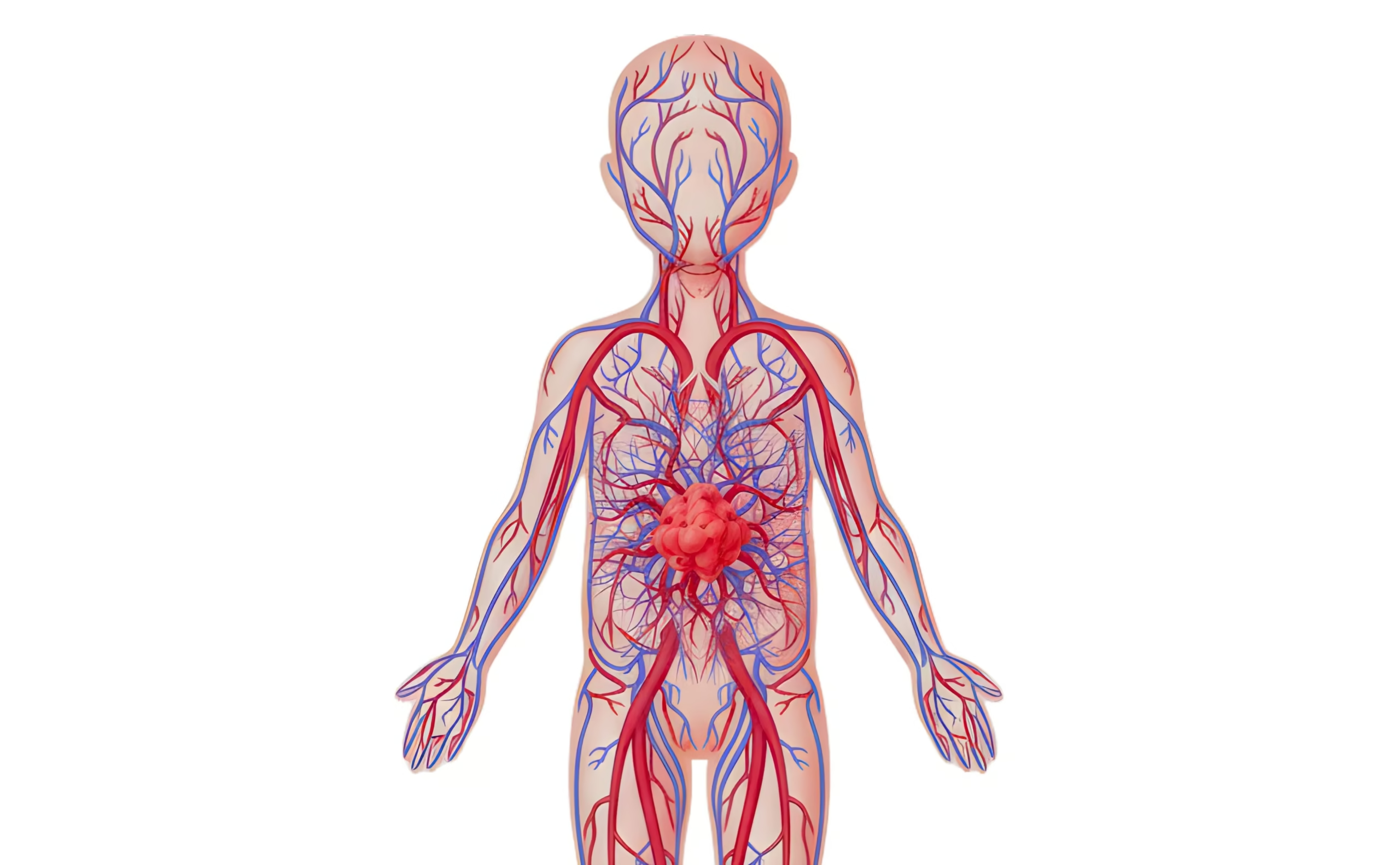
What is a solid tumor?
Organs in our body are made up of tiny particles called “cells”. These cells usually follow a normal pattern of growth in size and number. However, at times, their growth can become haywire and this causes unrestricted increase in the number of cells which lead to formation of a mass of cells called “ tumor”.
Tumours can be either benign (non cancerous) or malignant (cancerous). Cancerous tumors possess the ability to grow unrestricted and invade other surrounding as well as distant organs.
Roughly 55-60% of childhood cancers are malignant solid tumors. Among these, brain and other CNS tumors are the largest group making up 25% of all solid tumors, followed by neuroblastoma (6–8%), renal tumors such as Wilms tumor (5–7%), soft-tissue sarcomas (6–7%), bone tumors (3–4%) and retinoblastoma (3%), with other solid tumors like rhabdomyosarcoma, germ cell tumors making up the remainder.
Signs & symptoms :
Warning signs can be vague and easily mistaken for routine childhood problems. Parents should seek medical advice if a child has:
- Persistent headaches, vomiting commonly early morning
- Changes in vision or squint
- Loss of balance, change in gait
- A new lump or swelling anywhere in the body
- Bulging of eyes
- Unexplained bone pain or limping
- Persistent fever
- Unusual tiredness, weight loss
Diagnosis :
After a detailed history of the disease and physical examination, the oncologist may advise certain blood tests and scans to confirm the location, extent and type of tumor. Scans usually include a local CT scan or MRI and in some cases a whole body PET scan may be advised to look at spread of the tumor to distant organs. In most cases, a biopsy is done get a definitive diagnosis of the type of tumor.
Treatment
Treatment of solid tumors is multidisciplinary and involves chemotherapy, surgery with or without radiation. In selected cases, targeted therapy or immunotherapy may be offered.
Chemotherapy can be given either before or after surgery depending on the disease status and the oncologist’s advise.
Supportive services like nutrition, physiotherapy (especially in children with bone tumors), psychological counselling and educational rehabilitation are provided throughout the course of the treatment.
Utmost care is taken to design and adjust chemotherapy and radiation protocols so that long-term side effects are kept to a minimum. With early diagnosis and appropriate use of modern treatment options, most malignant solid tumors in children are potentially curable.
Long-term follow-up is essential even after treatment is completed, to monitor for late effects and to support the child’s educational, social and vocational rehabilitation.