13 March 2026
Table of Contents
If you’re researching bone marrow transplant options, you’ve probably discovered this life-saving treatment can be incredibly expensive in many countries.But the good news is that India offers world-class bone marrow transplants at a fraction of Western costs without compromising quality.
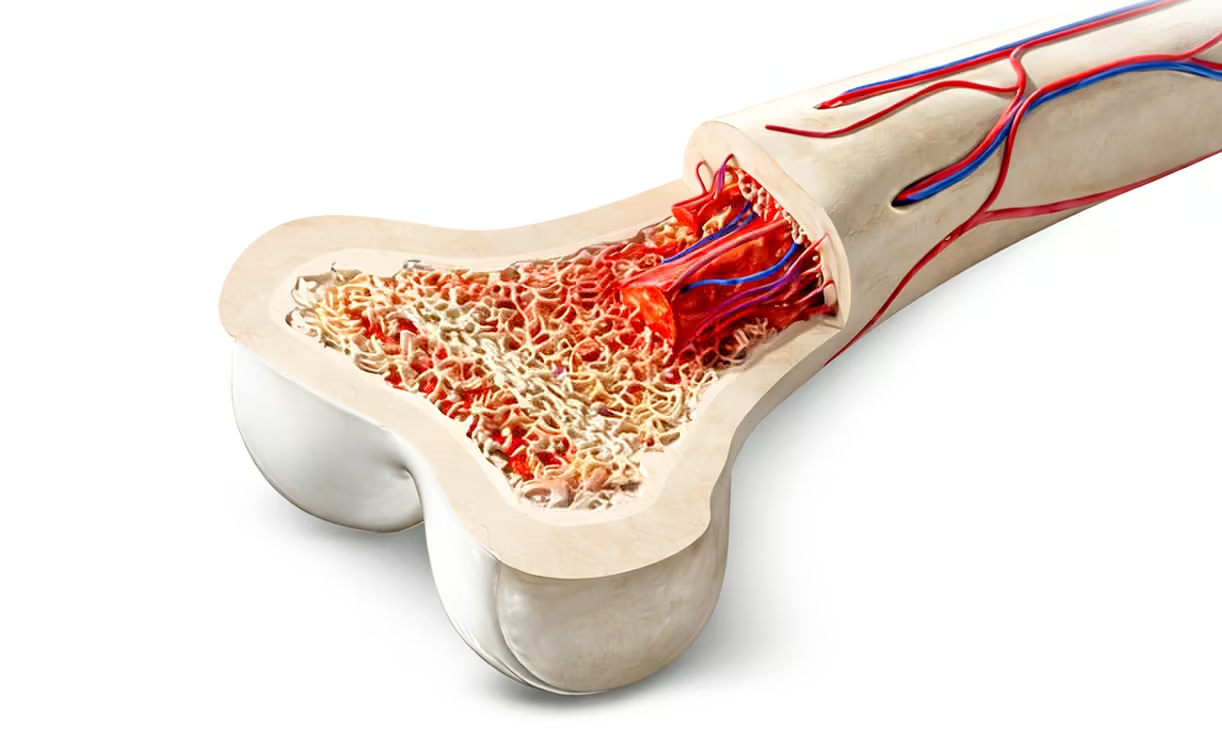
Let’s walk through everything you need to know about BMT in India in 2026, real costs, top hospitals, and actual success rates.
Understanding Different Types of BMT
Not all bone marrow transplants are the same. The type your doctor recommends will depend on your condition and donor availability.
Autologous Transplant
This is when doctors use your own stem cells. They collect and freeze your healthy cells before high-dose chemotherapy, then give them back to you afterward. It’s commonly used for lymphoma, multiple myeloma, and some other cancers.
Here the advantage is that there is no risk of graft-versus-host disease since you’re getting your own cells back. It’s also generally less expensive.
Allogeneic Transplant
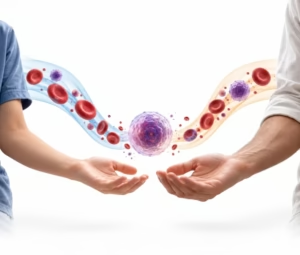
Here, you receive stem cells from a donor who can ideally be a sibling, but sometimes from an unrelated donor or even cord blood. This is the go-to for leukaemia, aplastic anaemia, thalassaemia, and sickle cell disease.
The complexity in this is finding a good match is crucial. The closer the match, the better your outcomes and the lower the risk of complications.
Haploidentical Transplant
This is a newer option that’s changed the game for patients without a perfect match. “Haploidentical” means half-matched, typically a parent, child, or half-sibling. Thanks to advances in transplant medicine, these half-matched transplants now have success rates approaching fully matched ones.
Why it matters: Almost everyone has a haploidentical donor available, usually within their immediate family.
What Does BMT Actually Cost in India?
Here’s where India really stands out. The same transplant that costs a fortune in Western countries like the United States, UK, or Australia typically costs a fraction of that here, without sacrificing quality.
Why India Offers Exceptional Value
When you compare treatment costs globally, the difference is staggering. Patients coming from developed nations find they can save substantially on the exact same procedures, performed with the same level of expertise and technology.
In India, whether you’re looking at treatment in tier-one cities like Delhi, Mumbai, Bangalore, Chennai, or Hyderabad, or in tier-two cities, you’ll find excellent facilities with experienced teams providing world-class care at costs that are genuinely accessible.
Cost by Transplant Type
Autologous BMT: Generally the most affordable option, as it uses your own cells and has fewer complexities. The cost includes pre-transplant workup, stem cell collection, conditioning therapy, the transplant procedure itself, and initial post-transplant care.
Allogeneic BMT (Matched Sibling): Moderately priced, with additional factors including donor workup and collection costs. This remains highly cost-effective compared to international standards.
Allogeneic BMT (Unrelated Donor): Higher in cost due to international donor registry fees and search processes, but still dramatically lower than the same procedure abroad.
Haploidentical BMT: Competitively priced and growing in popularity due to immediate donor availability within families.
Always ask for a detailed cost estimate upfront, including potential complications.
Top BMT Hospitals in India
India has several world-class centres performing hundreds of transplants annually with outcomes matching international standards.
What Makes a Good BMT Centre?
Across India’s major cities, you’ll find excellent bone marrow transplant programmes that combine expertise, technology, and compassionate care. These centres have:
- High annual volumes – Centres performing numerous transplants yearly consistently achieve better outcomes
- Specialized expertise – Dedicated haematology and transplant teams with years of experience
- State-of-the-art infrastructure – HEPA-filtered isolation rooms, advanced labs, dedicated BMT units
- Comprehensive support – 24/7 medical support, infection control protocols, psychological counseling
Leading Cities for BMT in India
Delhi NCR: The capital region houses some of India’s most advanced BMT programmes, with multiple centres offering both adult and paediatric transplants. Facilities here are equipped with the latest technology and experienced transplant teams.
Mumbai: Home to premier cancer centres and super-specialty hospitals with established BMT programmes. The city offers excellent infrastructure and highly experienced medical teams.
Chennai: Known for cost-effective care without compromising quality. Chennai’s hospitals have pioneered BMT in South India and continue to deliver outstanding outcomes.
Bangalore: A growing hub for medical excellence with comprehensive cancer care centres and competitive pricing alongside excellent clinical results.
Hyderabad: Offers some of the most cost-effective options while maintaining high standards of care, with multiple centres performing high volumes of successful transplants.
The BMT Journey: What to Expect
Pre-Transplant Phase (2-4 Weeks)
Comprehensive testing, blood work, imaging, cardiac and pulmonary function tests. If you need an unrelated donor, the search begins now.
Admission and Conditioning (1-2 Weeks)
High-dose chemotherapy (sometimes radiation) prepares your body for new stem cells. This is often the toughest phase physically.
Transplant Day (Day 0)
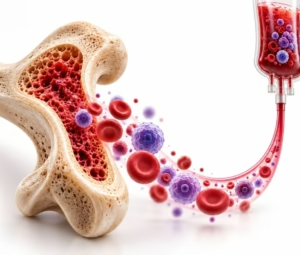
The transplant looks like a blood transfusion, stem cells infused through your central line over a few hours. Many celebrate this as their “second birthday.”
Engraftment Period (2-4 Weeks)
Protective isolation while waiting for new stem cells to start producing blood cells. Daily blood tests monitor progress.
Initial Recovery (4-8 Weeks Total Hospital Stay)
Once engrafted, continued monitoring until blood counts stabilize and there are no active complications.
First 100 Days Post-Transplant
Stay near the hospital with frequent clinic visits. This critical period monitors and manages any complications.
Long-Term Follow-Up
Recovery continues for months to years. Most patients return to normal activities within 6-12 months.
Success Rates in India
Here’s what you really want to know, how good are the outcomes?
Overall Success Rates by Type
Autologous BMT:
- 5-year survival: 60-80% depending on disease type
- Lower complication rates than allogeneic transplants
Allogeneic BMT (Matched Sibling):
- Acute leukaemia in remission: 60-75% long-term survival
- Aplastic anaemia: 75-85% success rate
- Thalassaemia major: 80-90% cure rate
Allogeneic BMT (Unrelated Donor):
- Success rates: 50-70% depending on match quality and disease
- Improved significantly with better matching and supportive care
Haploidentical BMT:
- Recent advances have pushed success rates to 55-70%
- Rapidly improving with new techniques
Factors Affecting Your Outcome
Several factors influence your specific odds:
- Disease status: Remission at transplant means better outcomes
- Age and overall health: Younger, healthier patients do better
- Donor match quality: Better match = better outcomes
- Centre experience: High-volume centres have superior results
How India Compares Globally
India’s top BMT centres report outcomes comparable to leading hospitals in the US and Europe at 10-15% of Western costs.
Frequently Asked Questions
They refer to closely related treatments, but BMT specifically refers to a transplant using stem cells collected from bone marrow, whereas stem cell transplant is a broader term that includes transplants using cells collected from blood, bone marrow, or cord blood.
Plan for 4-8 weeks in the hospital for the initial transplant and recovery. Here's the breakdown:
- Admission and conditioning: 1-2 weeks
- Transplant day: 1 day
- Waiting for engraftment: 2-4 weeks
- Post-engraftment stabilization: 1-2 weeks
If complications arise, infections, graft-versus-host disease the stay can extend to several months.
After discharge: You'll need to stay near the hospital (within 30-60 minutes) for the first 100 days minimum. International patients typically plan for 4-6 months total in India.
"Haploidentical" means half-matched. Traditional transplants needed a near-perfect match (usually a sibling). Haploidentical transplants use a half-matched donor, typically your parent, child, or half-sibling.
Why it's revolutionary: Almost everyone has a haploidentical donor available. You don't need to wait months searching registries or worry about not finding a match.
How it works now: New techniques using post-transplant cyclophosphamide (PTCy) have made these transplants nearly as successful as fully matched ones. India's leading centres have embraced this technology, making transplants accessible to more patients.
Yes, but you need to choose carefully. India's top BMT centres have:
- English-speaking medical teams
- Outcomes matching Western standards
- Experience with international patients
- Support services for travel, accommodation, visa assistance
What international patients should know:
- Verify the centre's experience with your specific condition
- Ensure they have 24/7 English-speaking support
- Plan for 4-6 months in India (transplant + initial recovery)
- Consider bringing a family member for support
Success rates vary by transplant type and disease, but India's leading centres report:
- Matched sibling transplants: 70-90% for non-malignant diseases, 60-75% for leukaemia in remission
- Unrelated donor transplants: 50-70% depending on match quality
- Haploidentical transplants: 55-70% with improving outcomes
- Autologous transplants: 60-80% depending on disease
Key point: These numbers match international standards. At experienced centres performing 50+ transplants annually, you're getting world-class care at a fraction of the cost.
Your individual odds depend on your specific disease, stage, age, overall health, and the quality of donor match.
Making Your Decision
Choosing to have a BMT in India is significant. Here’s what to do:
Research thoroughly: Get opinions from 2-3 centres, ask about their experience with your condition, request detailed cost estimates.
Consider logistics: Plan for family accommodation, post-discharge support, and long-term follow-up care.
Verify credentials: Check team qualifications, and transplant volumes.
Plan financially: Budget 20-30% above quoted cost, understand insurance coverage, ask about payment plans.
The Bottom Line
India offers world-class BMT care at genuinely affordable costs. With experienced centres performing thousands of successful transplants annually, advanced techniques, and outcomes matching international standards, you’re not choosing between quality and cost, you can have both.