06 October 2026
Table of Contents
Bladder cancer treatment has changed considerably over the past decade, and immunotherapy is a big part of that shift. Here’s the honest answer: immunotherapy isn’t new to bladder cancer — a form of it has been used for decades — but its role has expanded significantly, now reaching earlier and more advanced stages of the disease alike.
Let’s walk through this together. This guide explains how bladder cancer treatment has traditionally worked, where immunotherapy fits into the picture today, and what the treatment process actually looks like.
How Bladder Cancer Has Traditionally Been Treated
Treatment for bladder cancer has long depended heavily on how deeply the tumour has grown into the bladder wall. Early, superficial tumours are often treated with surgery to remove the tumour, sometimes followed by therapy delivered directly into the bladder. More invasive or advanced cancers have typically required more extensive surgery, chemotherapy, or a combination of both.
This general framework still holds, but the treatments available within it, particularly around immunotherapy, have expanded meaningfully.
Where Immunotherapy Fits Today
KEY FACT
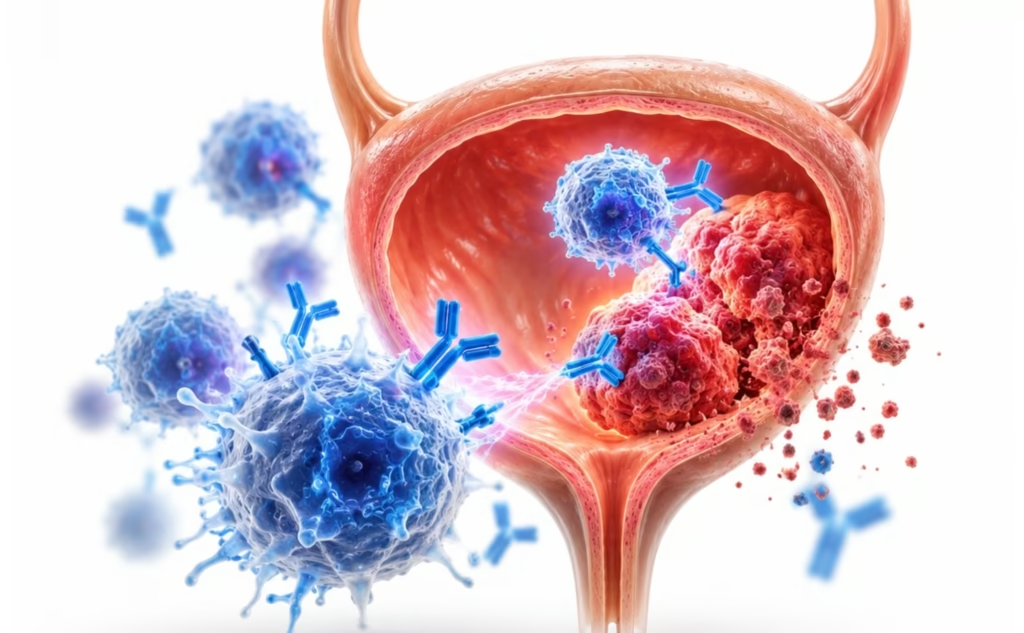
Immunotherapy has actually been part of bladder cancer treatment since the 1970s, in the form of a bladder-instilled treatment for early-stage disease. What’s changed more recently is the addition of newer immunotherapy types that work throughout the body, extending its role to advanced and metastatic disease.
Today, immunotherapy is considered at multiple points along the bladder cancer treatment path — from early, non-invasive disease through to advanced or recurrent cancer that has spread beyond the bladder.
Types of Immunotherapy Used in Bladder Cancer
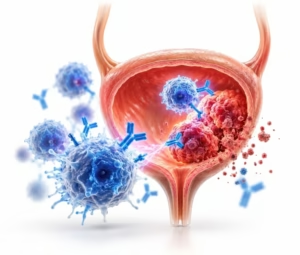
Bladder-instilled immunotherapy. Used for early-stage, non-muscle-invasive bladder cancer, this treatment is delivered directly into the bladder through a catheter, stimulating a local immune response against the tumour.
Checkpoint inhibitor immunotherapy. Given as an IV infusion, this type works throughout the body by helping the immune system recognise and attack cancer cells more broadly. It’s used for muscle-invasive, advanced, or metastatic bladder cancer, and in some cases for patients who cannot tolerate standard chemotherapy.
How the Treatment Process Works
After diagnosis, doctors determine the stage and extent of the cancer through imaging and tissue sampling, which shapes the specific immunotherapy approach recommended. Bladder-instilled treatment typically involves a course of weekly sessions over several weeks, while checkpoint inhibitor infusions are usually given every few weeks over a longer treatment course.
Throughout treatment, regular monitoring — including cystoscopy or imaging, depending on the stage — tracks how the cancer is responding and guides any adjustments to the plan.
Benefits and What to Watch For
IMPORTANT
Checkpoint inhibitor immunotherapy can cause immune-related side effects, since it activates the immune system broadly. Reporting new symptoms — fatigue, skin changes, digestive changes — promptly allows your care team to manage them early, regardless of how minor they seem.
For eligible patients, immunotherapy can offer an effective option with a different side effect profile from chemotherapy, which is particularly valuable for those who aren’t good candidates for more intensive chemotherapy regimens.
Early-Stage vs Advanced Disease Approach
| Stage | Typical Immunotherapy Role |
|---|---|
| Early-stage (non-muscle-invasive) | Bladder-instilled immunotherapy after tumour removal, to reduce recurrence |
| Muscle-invasive or advanced | Checkpoint inhibitor immunotherapy, sometimes combined with or after chemotherapy |
| Metastatic or recurrent | Checkpoint inhibitors considered as first-line or subsequent treatment, based on individual factors |
Frequently Asked Questions
No. Bladder-instilled treatment works locally within the bladder for early-stage disease, while checkpoint inhibitors are given by IV and work throughout the body, used for more advanced disease.
This depends on the individual case. For some early-stage cancers, immunotherapy follows surgery to reduce recurrence risk; for certain advanced cases, it may be used instead of or alongside chemotherapy. Your oncologist can clarify what applies to your specific diagnosis.
Factors include cancer stage, whether the tumour shows certain biomarkers, prior treatment history, and overall health, including tolerance for chemotherapy.
Bladder-instilled courses often run for several weeks initially, sometimes with maintenance sessions. Checkpoint inhibitor courses can continue for a year or more, depending on response.
Outcomes vary by individual and stage. Immunotherapy has meaningfully improved outcomes for many patients, particularly in reducing recurrence for early-stage disease and extending survival in advanced disease, though results differ case by case.
Yes — local side effects like bladder irritation, frequent urination, or mild flu-like symptoms are common but usually manageable and temporary. This differs from the immune-related side effects seen with IV checkpoint inhibitors.
A Final Word
Bladder cancer treatment today draws on a wider immunotherapy toolkit than it did even a decade ago, applicable at more stages of the disease. What this means for you is that immunotherapy — whether the long-established bladder-instilled form or newer checkpoint inhibitors — may be a relevant option regardless of what stage your diagnosis is at.
If you’d like to understand which approach applies to your specific diagnosis, speaking with a medical oncologist is the clearest way to get guidance tailored to your situation.