21 November 2026
Table of Contents
Hearing that a bone marrow transplant may be recommended after lymphoma treatment can feel unexpected, especially if you thought chemotherapy had already done its job. Here’s the honest answer: for certain types and stages of lymphoma, particularly when the disease returns after initial treatment, transplant is a well-established way of achieving a deeper, more lasting remission.
Let’s walk through this together. This guide explains when transplant typically comes into the picture for lymphoma, what the process involves, and what outcomes generally look like.
Understanding Lymphoma Treatment Basics
Lymphoma is a cancer of the lymphatic system, broadly divided into Hodgkin lymphoma and non-Hodgkin lymphoma, each with several subtypes. Most patients begin treatment with chemotherapy, sometimes combined with radiation or newer targeted and immunotherapy approaches, depending on the specific subtype.
Many patients achieve remission with this initial treatment alone. For some, though — particularly if the lymphoma returns (relapses) or doesn’t fully respond to initial chemotherapy (is refractory) — a transplant becomes an important next step.
When a Transplant Becomes Part of the Plan
KEY FACT
Transplant for lymphoma is most commonly used after relapse or an incomplete response to initial chemotherapy, rather than as a first treatment — the goal is to consolidate a second remission achieved through further chemotherapy, using high-dose treatment and transplant to make it last.
Certain aggressive lymphoma subtypes may also lead to transplant being considered earlier in the treatment course, if initial risk factors suggest a higher chance of relapse. This decision is always individualised, based on lymphoma subtype, response to treatment, and overall health.
Autologous vs Allogeneic Transplant for Lymphoma
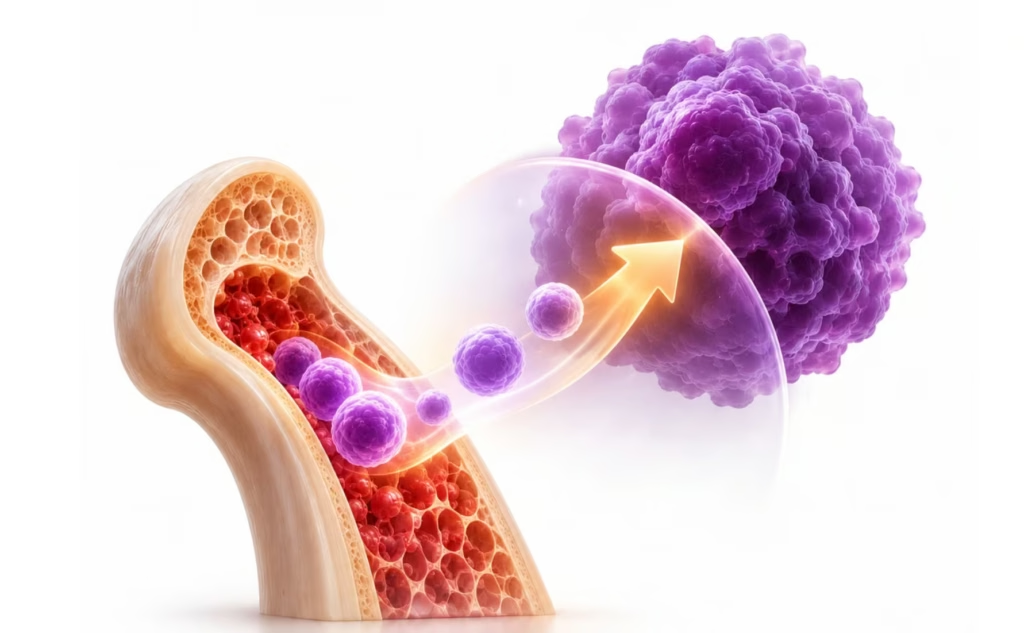
For most lymphomas, an autologous transplant — using the patient’s own previously collected stem cells — is the more commonly used approach. This is because lymphoma typically doesn’t originate within the bone marrow itself in the way leukemia does, making the patient’s own cells a viable and lower-risk option.
An allogeneic transplant, using a donor’s cells, is generally reserved for specific situations — such as certain lymphoma subtypes, or when the disease has relapsed even after a previous autologous transplant — where the donor’s immune cells can provide an additional graft-versus-lymphoma effect against remaining cancer cells.
The Transplant Process, Step by Step
- Evaluation and stem cell collection. For an autologous transplant, your own stem cells are collected and stored in advance, typically after a course of chemotherapy has brought the lymphoma back under control.
- Conditioning treatment. You receive high-dose chemotherapy, sometimes with radiation, to eliminate remaining lymphoma cells and prepare your body for the transplant.
- The transplant infusion. Your stored stem cells (or a donor’s, for allogeneic transplant) are given back through an IV, similar to a blood transfusion.
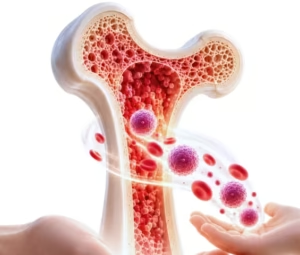
- Engraftment and recovery. Over the following weeks, the stem cells travel to your bone marrow and begin producing healthy blood cells, with close monitoring throughout this vulnerable period.
What Outcomes Generally Look Like
IMPORTANT
Outcomes after transplant for lymphoma vary considerably by subtype, disease stage at the time of transplant, and how well the lymphoma responded to treatment beforehand. Your hemato-oncology team can give you a much clearer picture based on your specific situation than any general figure could.
Broadly, autologous transplant for relapsed lymphoma that responds well to salvage chemotherapy beforehand offers a meaningful chance of long-term remission for many patients — which is why achieving a good response before transplant is such an important part of the overall plan.
Autologous vs Allogeneic at a Glance
| Type | Cell Source | Typically Used For |
|---|---|---|
| Autologous | Patient's own previously collected cells | Most relapsed or refractory lymphomas responding to salvage chemotherapy |
| Allogeneic | Matched donor cells | Select subtypes, or relapse after a prior autologous transplant |
Frequently Asked Questions
No. The decision depends on lymphoma subtype, how the relapse responds to further chemotherapy, and overall health. Some relapses are managed with chemotherapy or newer targeted therapies alone.
Cells are collected from your bloodstream through a process called apheresis, usually after a course of chemotherapy has reduced the lymphoma and mobilised stem cells into circulation.
The overall transplant process is similar, though specific recovery timelines and risks depend more on the individual and transplant type (autologous vs allogeneic) than on the underlying cancer type.
Relapse after transplant is possible, though transplant significantly improves the chances of durable remission for many patients compared with chemotherapy alone. Regular follow-up monitoring is part of long-term care after transplant.
This is generally considered for specific lymphoma subtypes, or when the disease has relapsed after a previous autologous transplant, where a donor's immune cells may offer additional benefit against the lymphoma.
This varies, but typically transplant occurs once a good response to salvage chemotherapy is confirmed, often a matter of weeks to a couple of months after treatment concludes.
A Final Word
Learning that a transplant may be needed for lymphoma, particularly after a relapse, can feel like an unexpected turn in your treatment journey. What this means for you is that this approach is a well-established, carefully sequenced part of lymphoma care — designed specifically to turn a second remission into a lasting one.
If a transplant has come up in your lymphoma treatment discussion, speaking with a hemato-oncology specialist can help you understand exactly why it’s being considered and what it would involve in your specific case.