02 November 2026
Table of Contents
If your child has thalassaemia major, your family’s life probably revolves around hospital visits: regular blood transfusions, iron removal medicines, blood tests and the constant worry about what the future holds. When a doctor mentions a bone marrow transplant, it can bring hope and fear at the same time.
This guide is written for parents. It explains, in simple words, how a transplant can help a child with thalassaemia, who may be suitable, why timing matters, how a donor is found, what happens during and after the transplant, and how you can support your child through it.
Thalassaemia Major in Simple Words
Thalassaemia is an inherited blood disorder. It affects the body’s ability to make haemoglobin, the protein in red blood cells that carries oxygen. A child gets thalassaemia major when they inherit a faulty gene from both parents, who are usually healthy carriers (thalassaemia trait).
Children with thalassaemia major cannot make enough healthy red blood cells, so they need regular blood transfusions, often every few weeks, for life. Each transfusion adds iron to the body, and the body has no natural way to remove it. Over time, extra iron builds up in the heart, liver and hormone glands. This is why children also need iron chelation medicines.
In simple terms
Transfusions and iron chelation control thalassaemia, but they do not fix the root problem: the bone marrow’s faulty stem cells. A bone marrow transplant replaces those stem cells with healthy ones.
How Can a Bone Marrow Transplant Help?
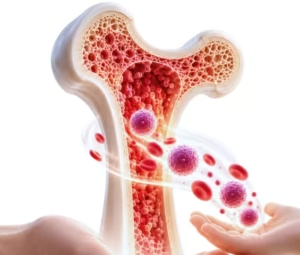
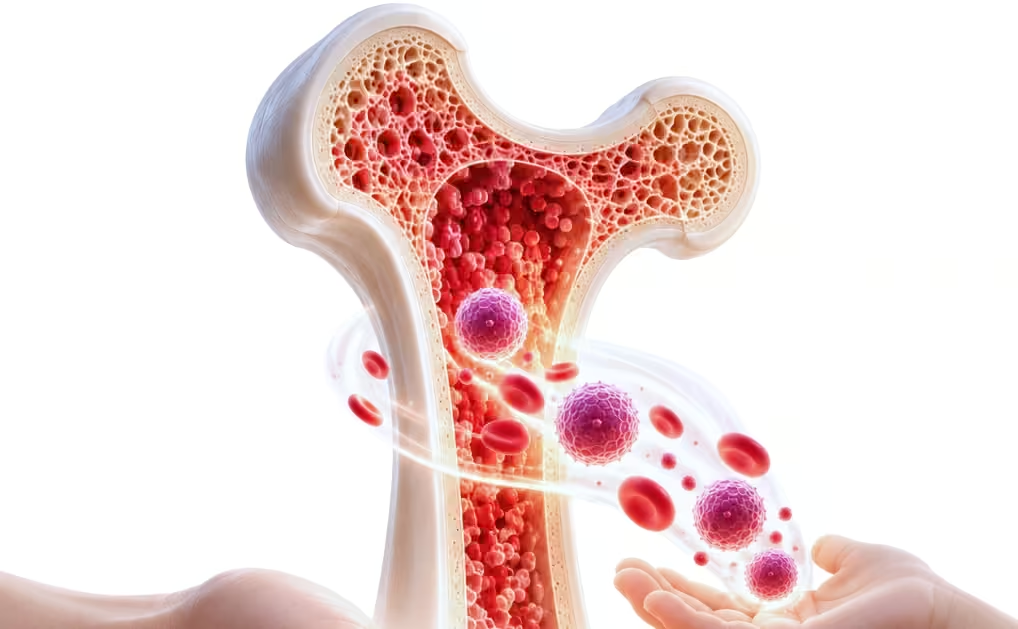
Blood cells are made by stem cells in the bone marrow. In thalassaemia, these stem cells carry the faulty genes. In a bone marrow transplant, also called a haematopoietic stem cell transplant (HSCT), the child’s faulty stem cells are replaced with healthy stem cells from a donor.
If the transplant is successful, the donor cells settle into the bone marrow and start making normal red blood cells. This means:
- No more regular transfusions for most children after a successful transplant
- No new iron build-up, and over time the extra iron can be removed
- Fewer hospital visits and a chance at a more normal childhood
Right now, a bone marrow transplant is the established curative treatment for thalassaemia major available in India. Gene therapies have been approved in some other countries, but they are not yet routinely available here.
Is Every Child Suitable for a Transplant?
Not every child with thalassaemia needs or can have a transplant. Your child’s doctor will consider:
- The type of thalassaemia: Transplant is mainly considered for children who are dependent on regular transfusions.
- Availability of a suitable donor
- Your child’s age and general health
- Iron levels and how well iron chelation has worked
- Liver health, including whether the liver is enlarged or scarred
- Heart function, because iron can affect the heart
- Infections, such as hepatitis, which may come from past transfusions
Doctors often group children into risk categories based on liver size, liver scarring and how regularly iron chelation has been taken. Children in lower-risk groups generally do better. This is one reason why keeping up with chelation matters so much, even when a transplant is being planned.
Why Timing Matters
Transplant tends to go best when it is done early in childhood, before iron has damaged the organs. Younger children usually:
- Have less iron stored in their organs
- Have healthier livers
- Have received fewer transfusions, so they are less likely to have developed antibodies or infections
- Recover faster, both physically and emotionally
This does not mean older children cannot have a transplant. Many do, especially with good iron control. But if a transplant is being considered, it is wise to start testing and planning early rather than waiting.
Finding a Donor
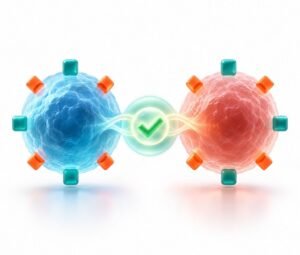
The donor’s stem cells need to be a close enough match to your child’s tissue type, known as HLA type. The main options are:
Matched sibling donor
A brother or sister with the same HLA type is traditionally the first choice. A sibling who is a thalassaemia carrier can still be a donor. The sibling’s healthy stem cells can make enough normal haemoglobin.
Matched unrelated donor
If no sibling matches, the team can search stem cell donor registries in India and abroad for a volunteer with a matching HLA type.
Half-matched (haploidentical) donor
A parent is almost always a half match. Half-matched transplants are now increasingly used in India for thalassaemia, which means more children can have a transplant even without a fully matched donor. These transplants need special care to prevent complications.
Cord blood
If you are expecting another baby, ask your doctor about collecting and storing the baby’s cord blood. If the new baby is a match, the cord blood, sometimes along with bone marrow from the same sibling later, may be used for the transplant.
Preparing for the Transplant
Preparation usually takes some weeks. Your child may have:
- Blood tests, including HLA confirmation, infection screening and iron levels
- Scans of the liver and heart, sometimes including a special MRI to measure iron
- A heart check with an echocardiogram
- A dental check to treat any tooth problems that could cause infection
- Placement of a central line, a soft tube in a large vein, so medicines and blood tests can be given without repeated needle pricks
- Extra transfusions and intensified iron chelation before transplant, if needed
Practical preparation matters too. Plan for a long hospital stay, who will stay with your child, care for other children at home, and time off work. Speak to the hospital’s social worker or financial counsellor early. Government and charitable programmes in India support transplants for children with thalassaemia, and the team can guide you on how to apply.
What Happens During the Transplant?
Conditioning
Before the transplant, your child receives chemotherapy and sometimes other medicines for several days. This is called conditioning. It clears out the faulty bone marrow and lowers the immune system so the donor cells are not rejected.
Transplant day
The donor’s stem cells are given through the central line, much like a blood transfusion. It is not an operation. Many families find the day itself surprisingly quiet.
Engraftment
Over the next couple of weeks or so, the new stem cells travel to the bone marrow and begin making blood cells. This is called engraftment. Until then, blood counts are very low, so your child stays in a protected room to reduce infection risk, and may need blood and platelet transfusions.
Going home
Once blood counts recover, your child is eating and drinking, and there are no serious complications, they can go home. Many families are asked to stay near the hospital for some time for frequent check-ups.
Possible Risks and Complications
It is important to understand the risks as well as the benefits. Your transplant team will discuss these in detail:
Most complications can be managed when spotted early. Children with good iron control, healthy livers and a well-matched donor generally face lower risks.
After discharge, contact the team immediately if your child has
- Fever, chills or any sign of infection
- A new rash, especially on the palms or soles
- Diarrhoea, stomach pain or vomiting
- Yellow eyes or skin, or swelling of the tummy
- Unusual tiredness, paleness, bruising or bleeding
Life After the Transplant
Recovery takes time. Here is what families can usually expect:
- Regular follow-up: frequent visits at first, becoming less frequent over months and years
- Chimerism tests: blood tests that show how much of the blood is coming from the donor’s cells
- Medicines: to prevent GVHD and infections, gradually reduced over time
- Removing extra iron: even after a successful transplant, iron stored from years of transfusions needs to be removed, usually by regular blood removal (venesection) or chelation medicines
- Vaccines: childhood vaccines are repeated once the new immune system is ready
- School and play: most children return to school after some months, once the team agrees the infection risk is low
- Growth and puberty checks: long-term follow-up includes growth, hormones and fertility
Good to know
A successful transplant cures thalassaemia in the blood, but it does not change your child’s genes in the rest of the body. Your child may still pass on a thalassaemia gene to their own children in future, so genetic counselling is helpful when they grow up.
Supporting Your Child and Family
- Explain things honestly in words your child can understand, and let them ask questions
- Bring familiar things to the hospital, such as toys, books and photos
- Keep a routine where possible, including schoolwork and play
- Remember siblings, especially if one is the donor; they need attention and reassurance too
- Look after yourself: accept help, take breaks and talk to the team’s counsellor if you feel overwhelmed
Frequently Asked Questions
Yes. A successful transplant can cure thalassaemia major, meaning the child no longer needs regular transfusions. It is currently the established curative treatment available in India. Success depends on factors such as the child's age, iron levels, liver health and the donor match.
Transplant generally goes best when done early in childhood, before iron damages the organs. However, older children can also have successful transplants, especially with good iron control. Your doctor will advise on the right timing for your child.
Yes. A sibling with thalassaemia trait can usually donate if they are an HLA match. Their stem cells can make enough healthy haemoglobin for the patient to live without regular transfusions.
Yes. Parents are usually half matches, and half-matched (haploidentical) transplants are now increasingly used for thalassaemia in India. They need special care to prevent complications, and your team will explain whether this is a suitable option.
Yes, donation is generally safe. Donors either give stem cells from the blood through a machine, or from the hip bone under anaesthesia. Children who donate are carefully assessed and looked after by the team. The donor's body replaces the donated cells.
Most children stay in hospital for some weeks, until the new cells have engrafted and blood counts are safe. Many families are then asked to stay near the hospital for a while for regular check-ups.
Often, for a while. Even after a successful transplant, iron stored from earlier transfusions needs to be removed. This is usually done with regular blood removal or chelation medicines until iron levels are normal.
Sometimes the donor cells are rejected and thalassaemia returns. If this happens, your child can go back to transfusions and chelation, and the team will discuss other options, which may include a second transplant in some cases.
Gene therapies for thalassaemia have been approved in some other countries, but they are not yet routinely available in India. A bone marrow transplant remains the established curative option here. Research is ongoing, and your doctor can update you on new developments.
Yes. Several government and charitable programmes in India support transplants for children with thalassaemia. The hospital's social worker or financial counsellor can help you understand what you may be eligible for and how to apply.
A Final Word
A bone marrow transplant can give a child with thalassaemia major the chance of a life free from regular transfusions. It is a big decision and a demanding journey, but with good preparation and support, many families come through it with renewed hope.
If you are wondering whether a transplant could be right for your child, a consultation with a paediatric haemato-oncology or bone marrow transplant specialist can help you understand your options, donor possibilities and the best time to plan.