01 October 2026
Table of Contents
Whether you’re facing a possible transplant yourself or considering becoming a donor for someone else, the term “bone marrow transplant” can carry a lot of unfamiliar weight. Here’s the honest answer: at its core, a transplant is simply a way of replacing damaged or diseased blood-forming cells with healthy ones — a well-established, carefully refined procedure that has helped patients recover for decades.
Let’s walk through this together. This guide covers the basics in plain language: what a transplant actually is, the signs that might lead your doctor to recommend one, who is generally eligible to donate, and what the process looks like from both sides.
What Is a Bone Marrow Transplant?
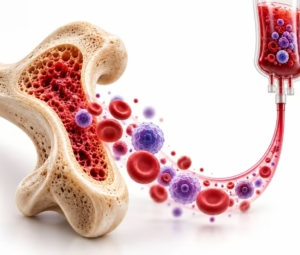
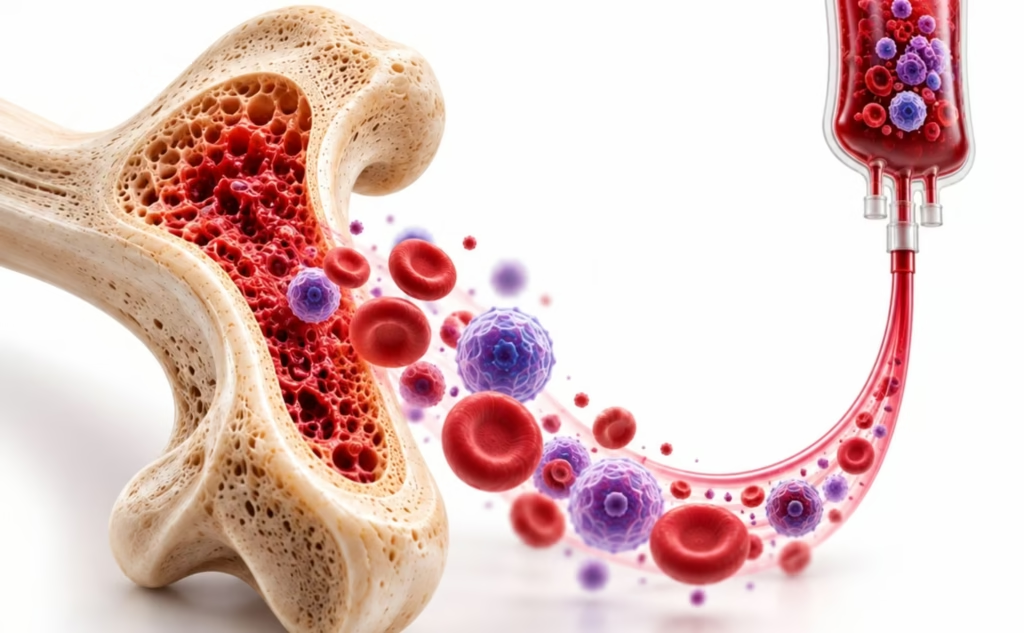
Bone marrow is the soft tissue inside your bones responsible for producing blood cells — red cells that carry oxygen, white cells that fight infection, and platelets that help blood clot. In certain diseases, such as leukemia, lymphoma, or severe bone marrow failure conditions, this marrow either produces abnormal cells or is damaged by the high-dose treatment needed to eliminate disease.
A bone marrow transplant, often called a stem cell transplant, replaces this damaged marrow with healthy blood-forming stem cells, allowing the body to rebuild a normal blood and immune system. These replacement cells can come from the patient’s own body (autologous) or from a matched donor (allogeneic), depending on the condition being treated.
KEY FACT
Most transplants today collect stem cells from the bloodstream rather than directly from bone marrow, using a process called apheresis — which is why “bone marrow transplant” and “stem cell transplant” are generally used interchangeably.
Signs You Might Need a Bone Marrow Transplant
A transplant is generally recommended by your treating doctor based on your specific diagnosis, not something you’d self-identify from symptoms alone. That said, several situations commonly lead to this conversation:
- A diagnosis of a blood cancer, such as leukemia, lymphoma, or multiple myeloma, particularly at higher-risk stages or after relapse
- Bone marrow failure conditions, such as aplastic anaemia, where the marrow stops producing enough healthy blood cells
- Certain inherited blood or immune disorders that affect how the bone marrow functions
- Cancer that hasn’t responded adequately to standard chemotherapy, or has returned after initial treatment
If any of these apply to you or a loved one, your hemato-oncology team will assess the full clinical picture — including test results, disease subtype, and overall health — before recommending a transplant specifically.
Who Can Donate Bone Marrow? Eligibility Basics
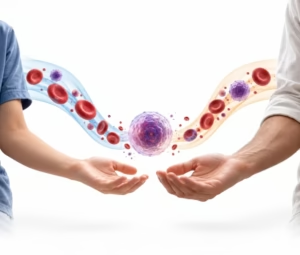
For an allogeneic transplant, using a donor’s cells, the pool of potential donors is generally assessed on a few key factors:
Age and general health. Most donor registries accept adults roughly between 18 and 60, in good general health, though exact ranges vary by registry and country.
Tissue type (HLA) match. A close match between donor and patient reduces the risk of complications. Siblings have the highest likelihood of a close match, though unrelated donors are found routinely through registries.
Absence of certain medical conditions. Conditions such as certain autoimmune diseases, active cancer, chronic infections, or significant heart or lung disease may exclude someone from donating, to protect both the donor and recipient.
A full donor health screening, including blood tests and a medical history review, is always carried out before any donor is confirmed — so eligibility is properly assessed case by case rather than assumed from a general checklist.
What the Donation Process Involves for a Donor
Donating stem cells is far less invasive than many people expect. There are two main collection methods, and which one is used depends on what the transplant requires:
Peripheral blood stem cell donation (most common). The donor receives injections for a few days beforehand to boost stem cell production, then blood is drawn through a machine that separates out the stem cells and returns the rest of the blood to the body — a process similar to a long blood donation, done without surgery.
Bone marrow donation (less common today). Marrow is withdrawn directly from the back of the pelvic bone under general anaesthesia. This is a same-day or overnight procedure, and donors typically recover within a couple of weeks.
Most donors return to normal activity within days to a couple of weeks, and the body fully replenishes the donated cells afterward.
Risks to Understand, for Patients and Donors
IMPORTANT
For patients, the main risks include infection during the period of low blood counts after transplant, and — for allogeneic transplants — graft-versus-host disease, where donor immune cells can affect healthy tissue. For donors, risks are generally mild and temporary, such as bone soreness or fatigue after donation.
Both patient and donor undergo thorough evaluation before proceeding, precisely so these risks can be anticipated and actively managed rather than encountered unexpectedly.
The Transplant Process for Patients, Step by Step
- Evaluation. Your care team assesses your diagnosis, overall health, and organ function to confirm a transplant is the right option, and determines whether you need a donor or will use your own cells.
- Donor search, if needed. For allogeneic transplants, potential donors — starting with siblings, then donor registries — are tested for a close tissue match.
- Conditioning treatment. You receive high-dose chemotherapy, sometimes with radiation, to prepare your body to receive the new stem cells.
- The transplant infusion. Stem cells are given through an IV, similar to a blood transfusion — usually a straightforward, non-surgical procedure.
- Engraftment and recovery. Over the following weeks, the new stem cells travel to your bone marrow and begin producing healthy blood cells, with close monitoring throughout.
Frequently Asked Questions
Most donors describe mild, temporary discomfort rather than significant pain — bone soreness for a few days after marrow donation, or mild flu-like symptoms from the injections before a peripheral blood stem cell donation. Both are manageable and short-lived.
Peripheral blood stem cell donors typically feel back to normal within a few days. Bone marrow donors may need one to two weeks for full recovery, depending on the individual.
Yes, family members, especially siblings, are usually tested first given the higher likelihood of a close tissue match, though testing doesn't guarantee a match will be found.
Common disqualifying factors include active cancer, certain chronic infections, significant heart or lung conditions, and some autoimmune diseases — though a full screening is always done individually rather than relying on a general list.
No. The transplant infusion itself is typically a non-surgical, IV-based procedure similar to a blood transfusion. What makes the overall process significant is the preparation and recovery period around it, not the infusion itself.
If a family member has been told they may need a transplant, your care team can guide you on testing. You can also register with a bone marrow donor registry independently if you'd like to be available as an unrelated donor for anyone in need.
A Final Word
Whether you’re learning about transplants because you might need one, or because you’re considering becoming a donor, the process is more established and manageable than it can initially seem. What this means for you is that thorough evaluation, clear eligibility criteria, and careful monitoring are built into every stage — for both patients and donors — so decisions are made with as much clarity and safety as possible.
If you have questions about your own eligibility for transplant, or about becoming a donor, speaking with a hemato-oncology specialist is the best way to get guidance specific to your situation.