06 October 2026
Table of Contents
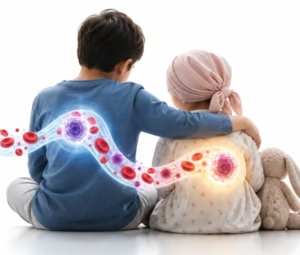
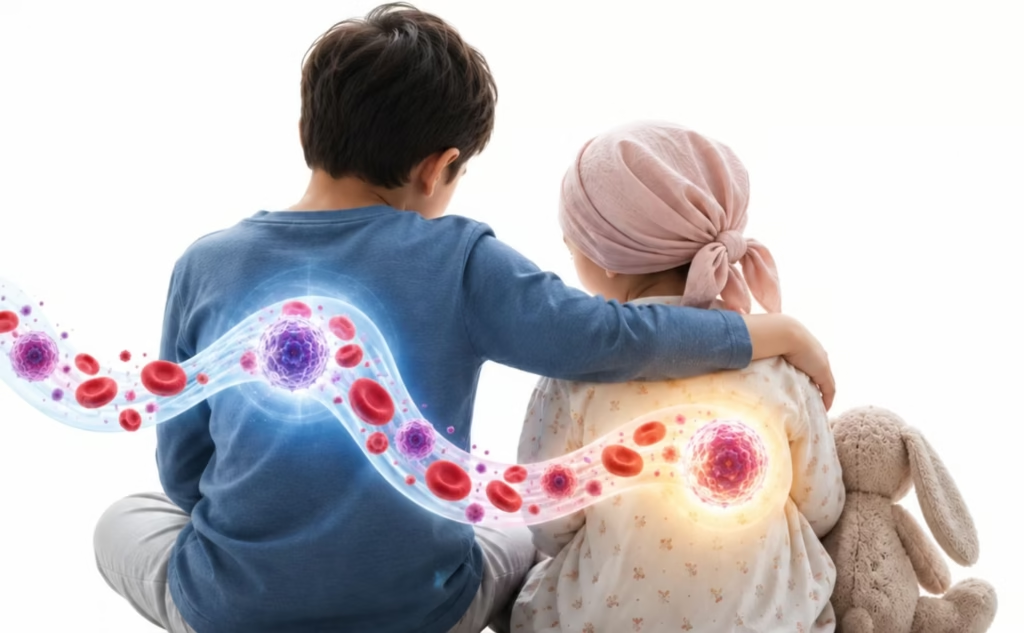
When a child becomes a stem cell donor for a brother or sister, most of the family’s attention understandably centres on the patient. Here’s the honest answer: the donor sibling is going through something significant too, and their emotional experience deserves just as much thoughtful attention, even though their role often gets far less of the spotlight.
Let’s walk through this together. This guide focuses specifically on the donor sibling — what they commonly feel, how to prepare them, and how to support them through and after donation.
Why Sibling Donors Need Support Too
A donor sibling is often praised for being brave and generous, which is true — but that framing can also make it harder for them to express fear, resentment, or ambivalence about the process. Many donor siblings feel pressure to appear uncomplicatedly positive about donating, even when they have real worries or mixed feelings.
Recognising the donor sibling as someone with their own emotional experience, separate from their role as a donor, is an important part of supporting the whole family through HSCT (haematopoietic stem cell transplant).
Common Emotional Experiences for Donor Siblings
KEY FACT
It’s common for donor siblings to feel a confusing mix of pride, fear, guilt, and even jealousy of the attention their sick sibling receives — none of which reflects poorly on them or their feelings about their brother or sister.
Some donor siblings also feel a heavy sense of responsibility — worrying that if the transplant doesn’t work, it’s somehow their fault. Naming this possibility directly, and reassuring them that the outcome isn’t within their control, can meaningfully ease this burden.
Preparing a Sibling for Donation
- Explain their role in honest, age-appropriate terms. Let them know specifically what will happen to their body during donation, using simple, accurate language rather than vague reassurance.
- Involve them in the decision where appropriate. Depending on age, giving a sibling some sense of agency in the process — even small choices, like what to bring on the day — can ease feelings of being swept along by events outside their control.
- Address their questions and fears directly. Ask what they’re worried about rather than assuming, since donor siblings often carry specific concerns — pain, needles, or missing school — that are easy to overlook amid focus on the patient.
Physical Care During the Donation Process
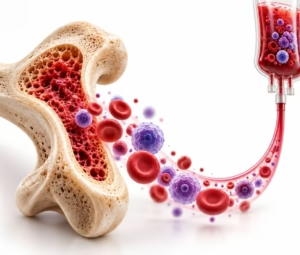
Most paediatric stem cell donations use the peripheral blood collection method, which doesn’t require surgery — the donor sibling receives injections over a few days to boost stem cell production, then undergoes a blood collection process similar to a lengthy blood draw. Some centres use bone marrow collection under general anaesthesia instead, depending on what the transplant requires.
Either way, mild soreness or fatigue afterward is common and temporary. Being physically present and attentive during recovery — even simple things like their favourite meal or a quiet day at home — helps reinforce that their comfort matters too.
Supporting the Sibling's Emotional Needs Afterward
IMPORTANT
Donor siblings can experience delayed emotional reactions once the immediate medical event has passed — sometimes weeks later, once attention has understandably shifted back to the patient’s recovery. Checking in specifically with the donor sibling, even well after donation, matters.
Simple, ongoing acknowledgement of what they did — separate from how the patient’s recovery is going — helps donor siblings feel seen as individuals, not just as a means to their sibling’s treatment.
The Donor Sibling vs the Patient Sibling
It’s worth holding both realities at once: the patient sibling is facing a serious medical journey, and the donor sibling is facing something significant of their own — physically and emotionally. Neither experience needs to be minimised to validate the other, and most families find that acknowledging both openly strengthens the relationship between the siblings rather than creating competition between their needs.
Frequently Asked Questions
Yes, this is a common and understandable reaction, particularly given how much family attention naturally centres on the patient. It doesn't reflect a lack of love for their sibling, and it usually eases with acknowledgement and support.
If they show ongoing withdrawal, persistent sadness, or difficulty discussing the experience weeks after donation, it's worth asking your paediatric care team about psychosocial support resources, which many centres offer as part of standard care.
Where age-appropriate, yes — involving them in the process, even in small ways, tends to support better emotional coping than a purely passive role.
Most children describe mild, temporary discomfort — soreness or fatigue — rather than significant pain, particularly with the more commonly used peripheral blood collection method. Your care team can walk you through what to expect for your child's specific donation type.
Very young children typically can't give full informed consent in the adult sense, which is why care teams and families work together to ensure the child's assent (age-appropriate agreement) and comfort are prioritised throughout the process.
Simple, deliberate acknowledgement of each child's specific experience — rather than only discussing the patient's progress — goes a long way. Many families find that one-on-one time with the donor sibling, separate from hospital visits, helps balance attention.
A Final Word
A donor sibling’s contribution to their brother or sister’s treatment is significant, and so is their emotional experience throughout it. What this means for you is that supporting both children through HSCT — not just the patient — helps the whole family navigate this experience with less strain and more mutual understanding.
If you’d like guidance specific to your donor child’s age and situation, your paediatric hemato-oncology team can help you find the right support, including child life or psychosocial resources where available.