
First-in-Human NKG2D CAR-NK Therapy | Trispecific T-Cell Engager | Integrated cfRNA and ctDNA Liquid Biopsy | Targeting MET
Colorectal cancer (CRC) remains a leading cause of cancer-related death worldwide, with limited treatment options for patients with metastatic disease. Chimeric antigen receptor (CAR)-engineered natural killer (NK) cells represent a novel immunotherapeutic approach with potential advantages in safety and allogeneic applicability.
A first-in-human Phase I exploratory study1 evaluated allogeneic NKG2D CAR-NK cells engineered with membrane-bound IL-15, with or without PD-1 blockade, in patients with heavily pretreated metastatic colorectal cancer. Six patients received lymphodepletion followed by four CAR-NK infusions over two weeks. Treatment was well tolerated, with no treatment-related deaths and only manageable, reversible toxicities
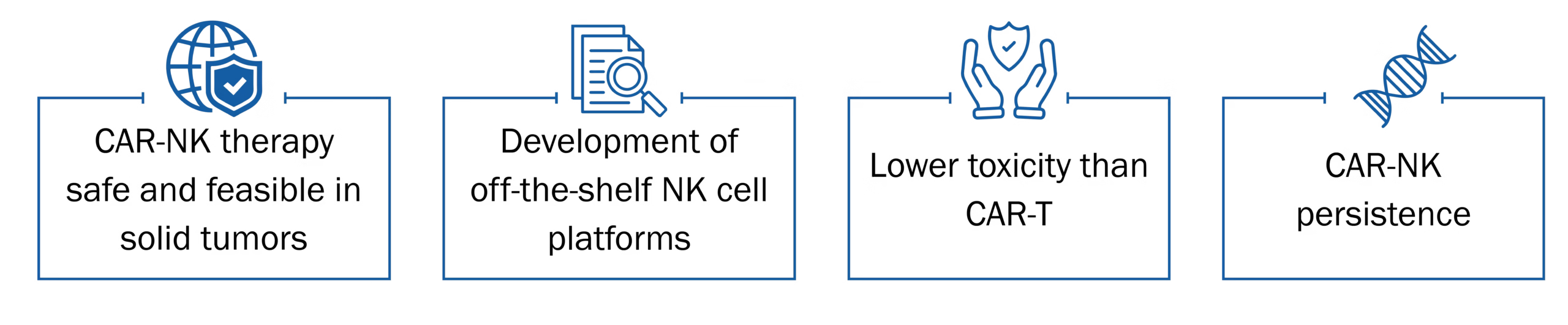
Colorectal cancer (CRC) remains a leading cause of cancer-related death worldwide, with limited treatment options for patients with metastatic disease. Chimeric antigen receptor (CAR)-engineered natural killer (NK) cells represent a novel immunotherapeutic approach with potential advantages in safety and allogeneic applicability.
A first-in-human Phase I exploratory study1 evaluated allogeneic NKG2D CAR-NK cells engineered with membrane-bound IL-15, with or without PD-1 blockade, in patients with heavily pretreated metastatic colorectal cancer. Six patients received lymphodepletion followed by four CAR-NK infusions over two weeks. Treatment was well tolerated, with no treatment-related deaths and only manageable, reversible toxicities such as mild CRS and expected hematologic effects. While clinical responses were modest (one patient achieved stable disease), the combination of CAR-NK + anti-PD-1 showed enhanced biological activity, including significantly higher CAR-NK expansion and prolonged survival in some patients (over 700 days), suggesting a potential synergistic effect.
such as mild CRS and expected hematologic effects. While clinical responses were modest (one patient achieved stable disease), the combination of CAR-NK + anti-PD-1 showed enhanced biological activity, including significantly higher CAR-NK expansion and prolonged survival in some patients (over 700 days), suggesting a potential synergistic effect.
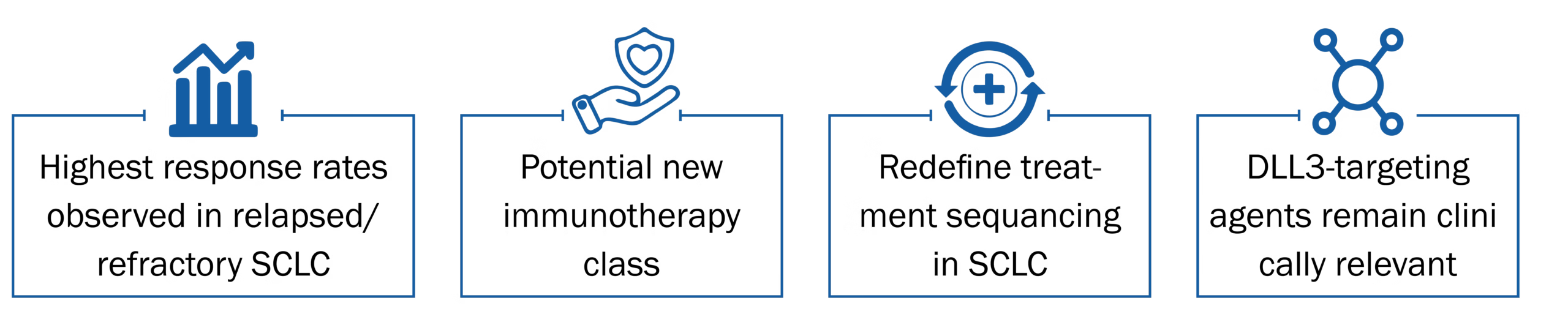
New Phase 2 data2 presented this year at ASCO meeting highlight ZG006, a trispecific T-cell engager targeting CD3/DLL3/DLL3, as a promising novel therapy for patients with heavily pretreated small-cell lung cancer (SCLC). In the first 40 patients analyzed, ZG006 demonstrated an objective response rate (ORR) of 66.7% among evaluable patients, 78.6% at the higher 30 mg dose— despite many having low or medium DLL3 expression. All responses were observed after ≥2 prior treatment lines, including prior PD-1/PD-L1 therapy.
New Phase 2 data2 presented this year at ASCO meeting highlight ZG006, a trispecific T-cell engager targeting CD3/DLL3/DLL3, as a promising novel therapy for patients with heavily pretreated small-cell lung cancer (SCLC). In the first 40 patients analyzed, ZG006 demonstrated an objective response rate (ORR) of 66.7% among evaluable patients, 78.6% at the higher 30 mg dose— despite many having low or medium DLL3 expression. All responses were observed after ≥2 prior treatment lines, including prior PD-1/PD-L1 therapy. Safety was manageable, with common events including fever, mild CRS, and cytopenias; grade 3–4 toxicities occurred in 12.5%, and no treatment-related deaths were reported.
Safety was manageable, with common events including fever, mild CRS, and cytopenias; grade 3–4 toxicities occurred in 12.5%, and no treatment-related deaths were reported.
A new study3 presented at ESMO Asia 2025 highlights a promising blood-based approach for early colorectal cancer (CRC) detection using a combined cell-free RNA (cfRNA) and circulating tumor DNA (ctDNA) assay. By integrating gene-expression signals from cfRNA with mutation and methylation markers from ctDNA, the multi-omics liquid biopsy significantly improves sensitivity, especially for early-stage (Stage I–II) CRC, where traditional screening tools often miss disease.
The results support the potential of a combined cfRNA–ctDNA assay as a next-generation screening platform that could enhance early CRC detection and reduce cancer-related mortality

Could meaningfully contribute to reduced CRC incidence and mortality through earlier diagnosis.
U.S. Food and Drug Administration (FDA) granted accelerated approval to Telisotuzumab vedotin‑tllv (Emrelis), an antibody-drug conjugate (ADC) for patients with locally advanced or metastatic non-squamous non-small cell lung cancer (NSCLC) whose tumors show high c-MET overexpression. The therapy combines a MET-targeted antibody and a microtubule inhibitor conjugate, delivering cytotoxic effects specifically to MET-high cancer cells. Efficacy was evaluated in the LUMINOSITY study4 (NCT03539536), a multicenter, open label, multi-cohort trial. The trial included 84 patients with epidermal growth factor receptor (EGFR) wild-type, non-squamous NSCLC with high c-Met protein overexpression who had received prior systemic therapy. The major efficacy outcome measures were confirmed overall response rate (ORR) and duration of response (DOR), determined by blinded independent central review (BICR) according to RECIST 1.1. ORR was 35% (95% CI: 24, 46) and median DOR was 7.2 months (95% CI: 4.2, 12).
Alongside approval, FDA also approved the VENTANA MET (SP44) RxDx Assay to identify eligible patients (≥50% of tumor cells strongly staining for MET by IHC).
Accelerated approval supports integration of ADC-based precision therapy into treatment algorithms for MET-driven disease.

Source: 1. Wang, D., Li, B., Shen, G. et al. Cancer Immunol Immunother 2025;74:341. https://doi.org/10.1007/s00262-025-04196-9. 2. Ai S, et al. Presented at: 2025 ASCO Annual Meeting. May 30-June 3, 2025; Chicago, IL. Abstract 8007. 3. Momen-Roknabadi A, Karimzadeh M, Chen NC, et al. Clin Cancer Res. 2025;31(15):3229-38. doi: 10.1158/1078-0432.CCR-25-0449. 4. Zhao C, Lu D, Gao J. Drug Discov Ther. 2025;19(4):275–76. doi: 10.5582/ddt.2025.01058.

At SunAct, we remain dedicated to tracking and sharing global advances that continue to redefine the landscape of cellular therapy and oncology. Stay tuned for our next edition as we uncover more breakthroughs and emerging trends shaping the future of cancer research.
Disclaimer: This newsletter is intended for healthcare professionals and researchers. Information is for educational purposes only.