
FSHR CAR-T | IN VIVO CAR-NK ENGINEERING | URINE cfRNA | TRE-515 + KRAS INHIBITORS
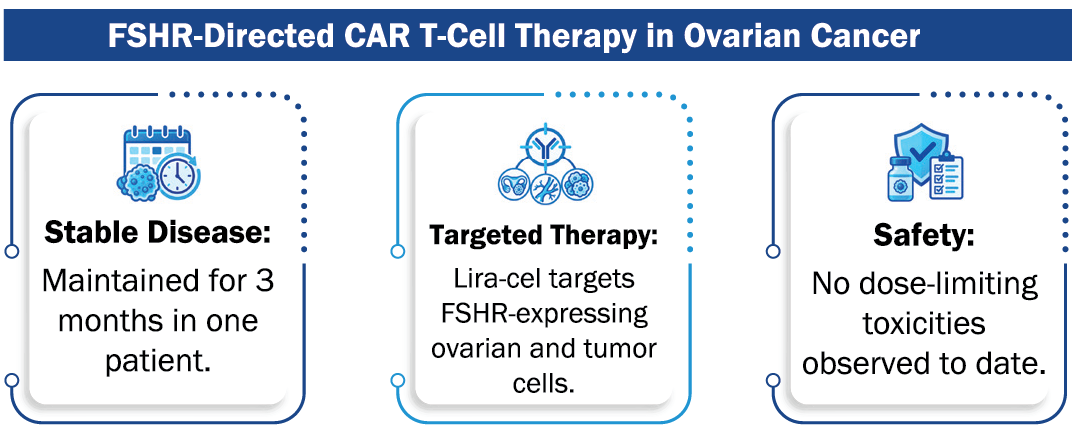
Liraltagene autoleucel (lira-cel) is an autologous CAR T-cell therapy targeting the follicle-stimulating hormone receptor (FSHR), which is expressed on ovarian cells, tumor vasculature, and certain cancer cells, with limited expression in healthy tissues. In the ongoing Phase 1 dose-escalation trial (NCT05316129) involving adult women with recurrent ovarian cancer who have progressed after at least two prior therapies, one patient achieved stable disease lasting 3 months, representing the first reported case of stable disease in the trial. The patient received lira-cel at a dose of 1 × 10⁷ CAR-positive cells/kg, following lymphodepletion, in the fifth dose cohort, the highest dose level evaluated to date. Stable disease was observed 90 days after treatment. Additionally, multiple patients have survived for more than 1 year after treatment, including one who survived beyond 2 years. No dose-limiting toxicities have been observed in any patient treated to date.
Reference: ClinicalTrials.gov, NCT05316129; clinical update, 5 October 2026. Trial record.
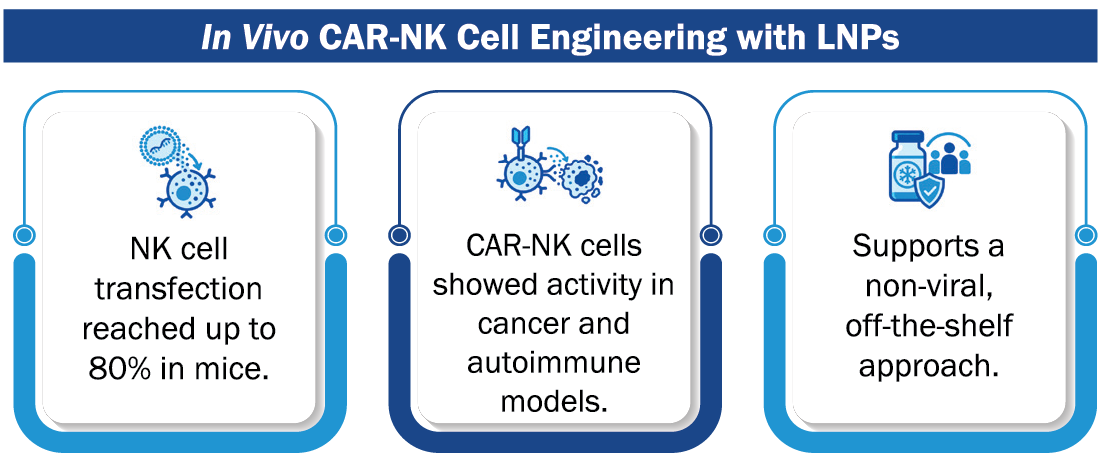
A preclinical study developed NK cell-targeted lipid nanoparticles (NtLNPs) incorporating engineered biparatopic NK cell ligands to enable receptor-specific uptake and mRNA delivery. The lead NtLNPs achieved up to 80% NK cell transfection in mice, with minimal off-target effects. Systemic administration of CAR-encoding mRNA generated CAR NK cells in vivo, demonstrating activity across healthy, autoimmune, solid tumor, and humanized hematologic malignancy models. In healthy mice, CD19-targeted CAR NK cells completely depleted circulating B cells, while CD3-targeted CAR NK cells eliminated nearly all autoreactive T cells in an autoimmune hepatitis model, highlighting their potential for treating T cell-driven autoimmune diseases. In solid tumor models, NtLNPs targeting the inhibitory checkpoint NKG2A enhanced antitumor efficacy by alleviating Qa-1b-mediated immunosuppression. Furthermore, NtLNPs optimized for human CAR NK cells induced tumor regression in two humanized hematologic malignancy models. These findings support the potential of targeted NtLNPs as a platform for systemic, in vivo CAR NK cell generation, although further studies are needed to establish clinical safety and efficacy.
Reference: Chen Y. et.al. 2026 In vivo engineering of CAR natural killer cells for immunotherapy using ligand-directed lipid nanoparticles. Nat Biotechnol. 2026 Oct 13.
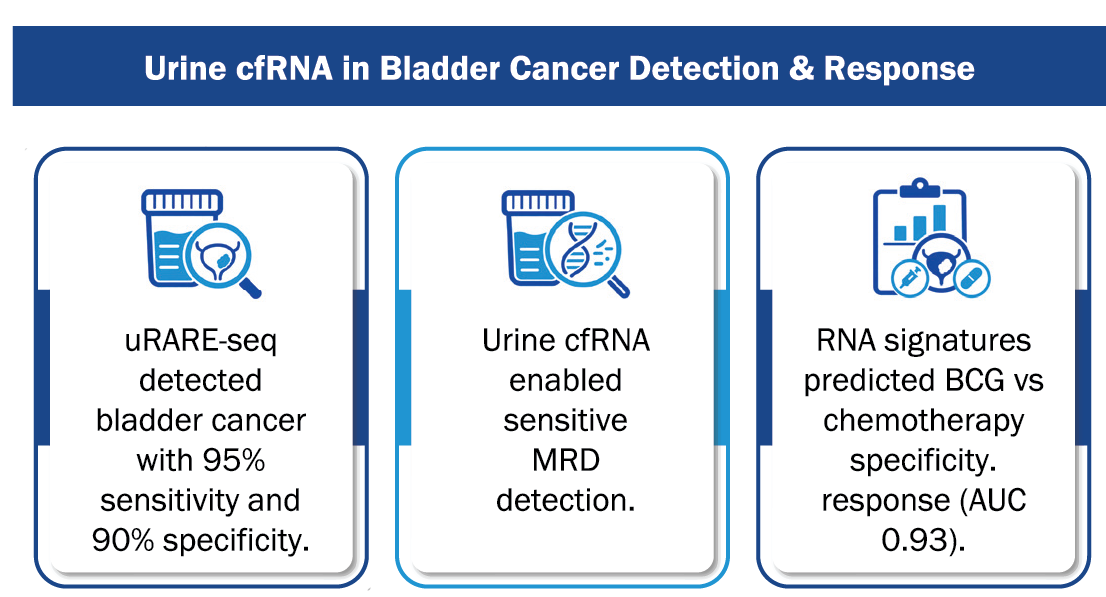
Researchers developed uRARE-seq (urine random priming and affinity capture of cell-free RNA fragments for enrichment analysis by sequencing), a liquid biopsy method for profiling urine cell-free RNA (cfRNA), and evaluated it in 683 urine samples from patients with cancer and controls. The method identified transcripts originating from genitourinary tissues and tumour-derived transcripts in prostate, kidney and bladder cancers. It detected localized bladder cancer with 95% sensitivity at 90% specificity, outperforming urine cytology and a tumour-naive urine tumour-DNA assay in the reported comparisons, while remaining unaffected by field-effect mutations. uRARE-seq also enabled sensitive detection of minimal residual disease (MRD) and distinguished molecular responses following surgery from those after intravesical Bacillus Calmette–Guérin (BCG) therapy. Furthermore, pretreatment urine from BCG responders showed enrichment of T-cell and other immune signatures, whereas nonresponders exhibited higher proliferation-related gene expression. A treatment-response prediction model achieved an AUC of 0.93 for distinguishing likely responses to BCG versus chemotherapy, highlighting uRARE-seq’s potential for non-invasive cancer detection, MRD monitoring and treatment-response prediction.
Reference: Liu, et al. Urine cell-free RNA for bladder cancer detection and treatment response prediction. Nat Med (2026).
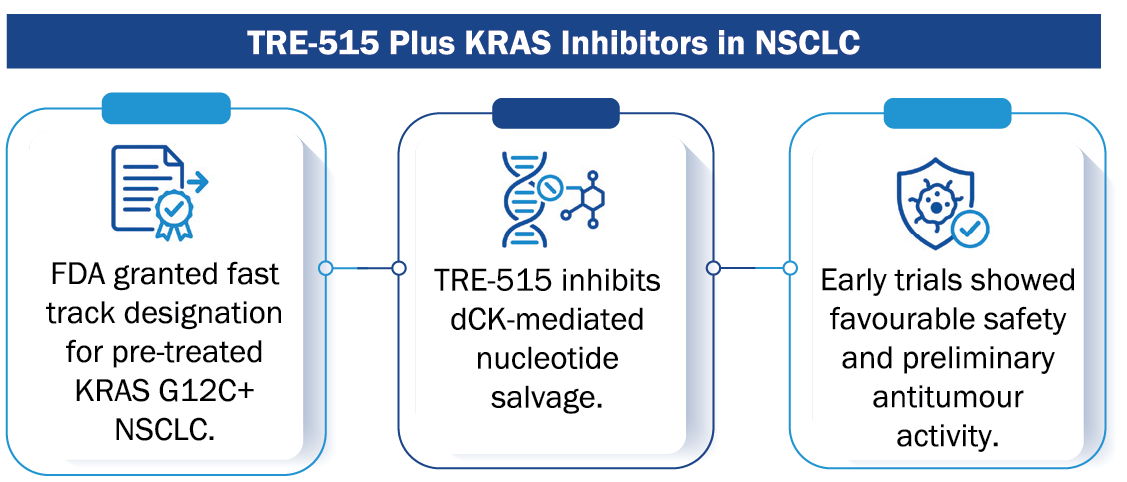
The FDA has granted Fast Track designation to TRE-515 in combination with KRAS inhibitors for patients with KRAS G12C mutation-positive non-small cell lung cancer (NSCLC) previously treated with an anti-PD-(L)1 antibody and platinum-based chemotherapy. TRE-515 is a first-in-class oral small-molecule inhibitor of deoxycytidine kinase (dCK), the rate-limiting enzyme in the nucleoside salvage pathway and the only dCK inhibitor currently in clinical development. KRAS inhibitor-treated tumours may increase their reliance on this pathway to maintain nucleotide availability under therapeutic stress. Preclinical PET imaging demonstrated persistent dCK activity following KRAS inhibition, which was subsequently blocked by TRE-515. TRE-515 has also demonstrated favourable safety and preliminary antitumour activity in an ongoing first-in-human trial.
Reference: TRE-515 FDA Fast Track designation announcement, October 2026.

At SunAct, we remain dedicated to tracking and sharing global advances that continue to redefine the landscape of cellular therapy and oncology. Stay tuned for our next edition as we uncover more breakthroughs and emerging trends shaping the future of cancer research.
Disclaimer: This newsletter is intended for healthcare professionals and researchers. Information is for educational purposes only.