08 May 2026
Every year, the 8th of May is celebrated as World Thalassemia Day – a day dedicated to thalassemia patients who fight a lifelong battle against this inherited disease. It also gives us hematologists a chance to raise awareness and bring forward the need to recognize and correctly treat thalassemia.
Thalassemia is an inherited blood disorder that makes deficient or abnormal hemoglobin and this leads to excess breaking of blood cells. This causes patients to have “anemia” or low hemoglobin levels.
It is often considered to be a rare disease, but a different story unfolds in low and middle income (LMIC) countries like India. As per the Indian Council of Medical Research (ICMR), approximately 10,000 to 12,000 children with β-thalassemia are born annually and there are about 65,000 to 67,000 β-thalassemia patients nationally. These numbers consistently signal the same reality : thalassemia in India is not a small, occasional problem – it is a sustained public health burden.
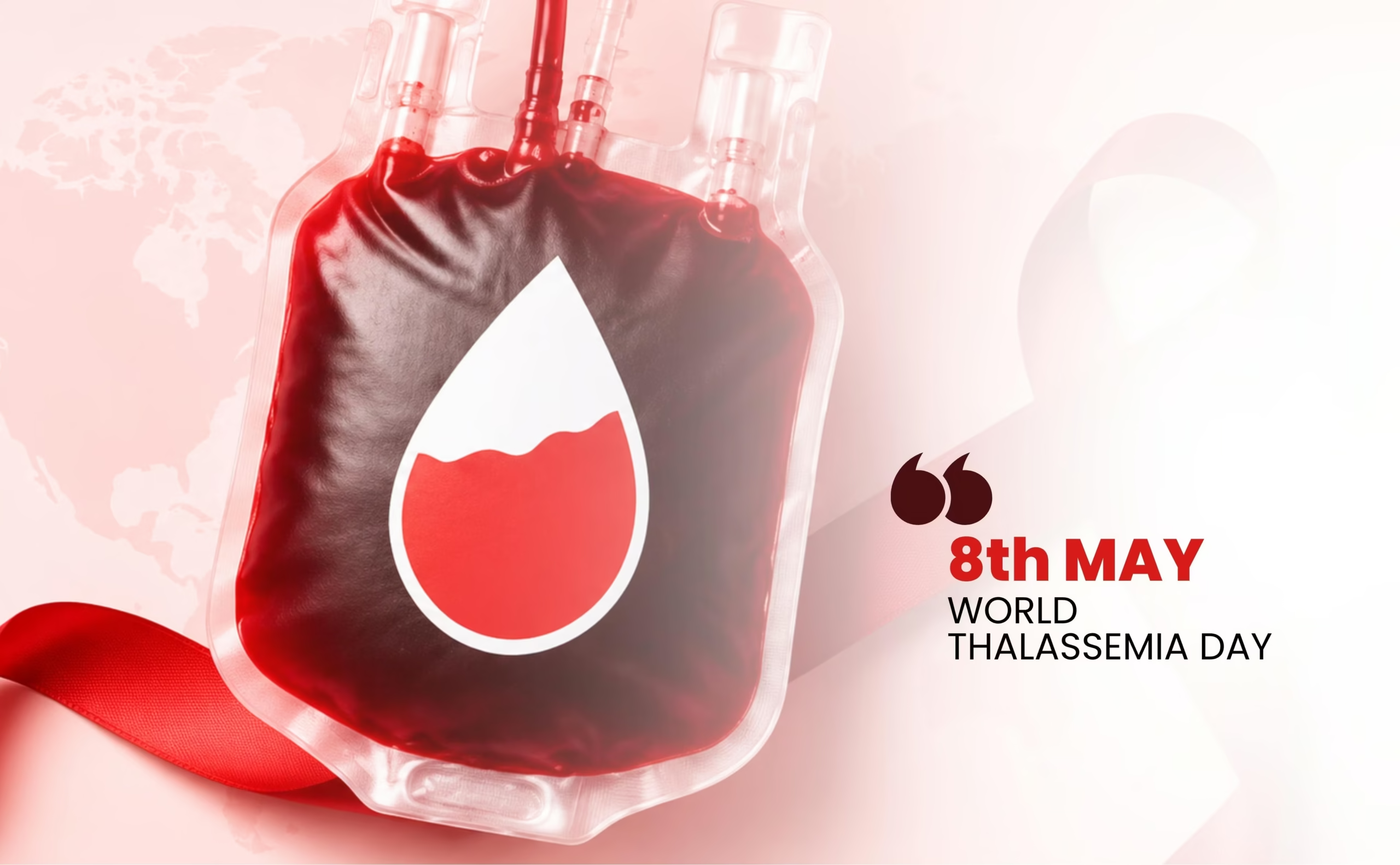
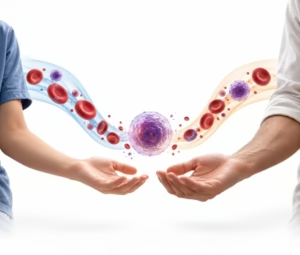
How does one get thalassemia?
Common symptoms may include:
- Tiredness or weakness
- Shortness of breath
- Pale skin
- Fast, pounding, or irregular heartbeat
- Delayed growth in children
- Enlarged spleen or liver
- Facial bony changes/chipmunk facies
Thalassemia is usually diagnosed in late infancy or early childhood depending upon the severity of the disease. Special tests called “High performance liquid chromatography” or “HPLC” can detect abnormal hemoglobins and diagnose thalassemia
What is the treatment like?
Treatment depends on the type and severity of thalassemia. People with thalassemia trait or minor forms may need little or no treatment. Children or adults with severe thalassemia (transfusion dependent) may need regular blood transfusions to maintain healthy hemoglobin levels.
Regular check-ups are important to monitor growth and puberty and organs like the heart and liver which are commonly affected in thalassemia patients.
Can it be completely cured?
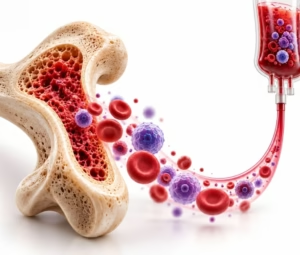
Yes! Bone marrow transplant remains a potentially curative option for thalassemia when a suitable donor is available. Advances in gene therapy have shown remarkable results in selected patients and may become more widely accessible in the future.
This year, we celebrate World Thalassemia Day with the theme : “Hidden no more. Finding the undiagnosed. Supporting the unseen”
Prevention is better than cure! And thalassemia can be prevented.
For this, it is essential to raise awareness. The most effective way to reduce prevalence of thalassemia in our country is by preventing new thalassemia affected births. Prospective parents should undergo thalassemia testing (HPLC) before pregnancy or in early pregnancy. If both parents are thalassemia minors, doctors and genetic counsellors can guide them towards taking an informed decision.
Also, it is important to arrive at the correct diagnosis at the earliest. Not all low hemoglobin is due to iron deficiency or poor nutrition. Hence it is strongly recommended not to self treat with iron supplements as excess iron can be detrimental in thalassemia patients.
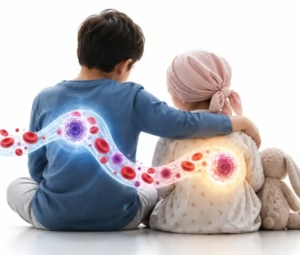
Thalassemia is a chronic, lifelong battle that affects not just the patient, but the entire family emotionally, physically and financially. Many patients spend a significant part of their lives in hospitals and are often unable to live life to their fullest potential. They often have a shorter than average life expectancy. Many don’t even make it to their 40s. But with timely diagnosis and comprehensive, all round care by a hematologist trained in dealing with thalassemia, these warriors can live healthier, more fulfilling lives.