14 May 2026
Table of Contents
A sarcoma diagnosis is rare, serious, and for most families, completely unexpected. You may have never even heard the word before it appeared in a report. Now you’re faced with finding the right hospital for sarcoma treatment in India and it can feel like you’re trying to make one of the most important decisions of your life without enough information to make it well. This guide is here to change that.
Sarcoma is not a cancer that every oncologist sees regularly. It is a specialised field, It’s said because knowing this means you can ask the right questions, make informed choices, and feel confident about where your loved one receives care.
Let’s go through everything you need to know: what sarcoma is, how it’s treated and what questions to ask when you’re evaluating your options.
What Is Sarcoma and Why Is It Different from Other Cancers?
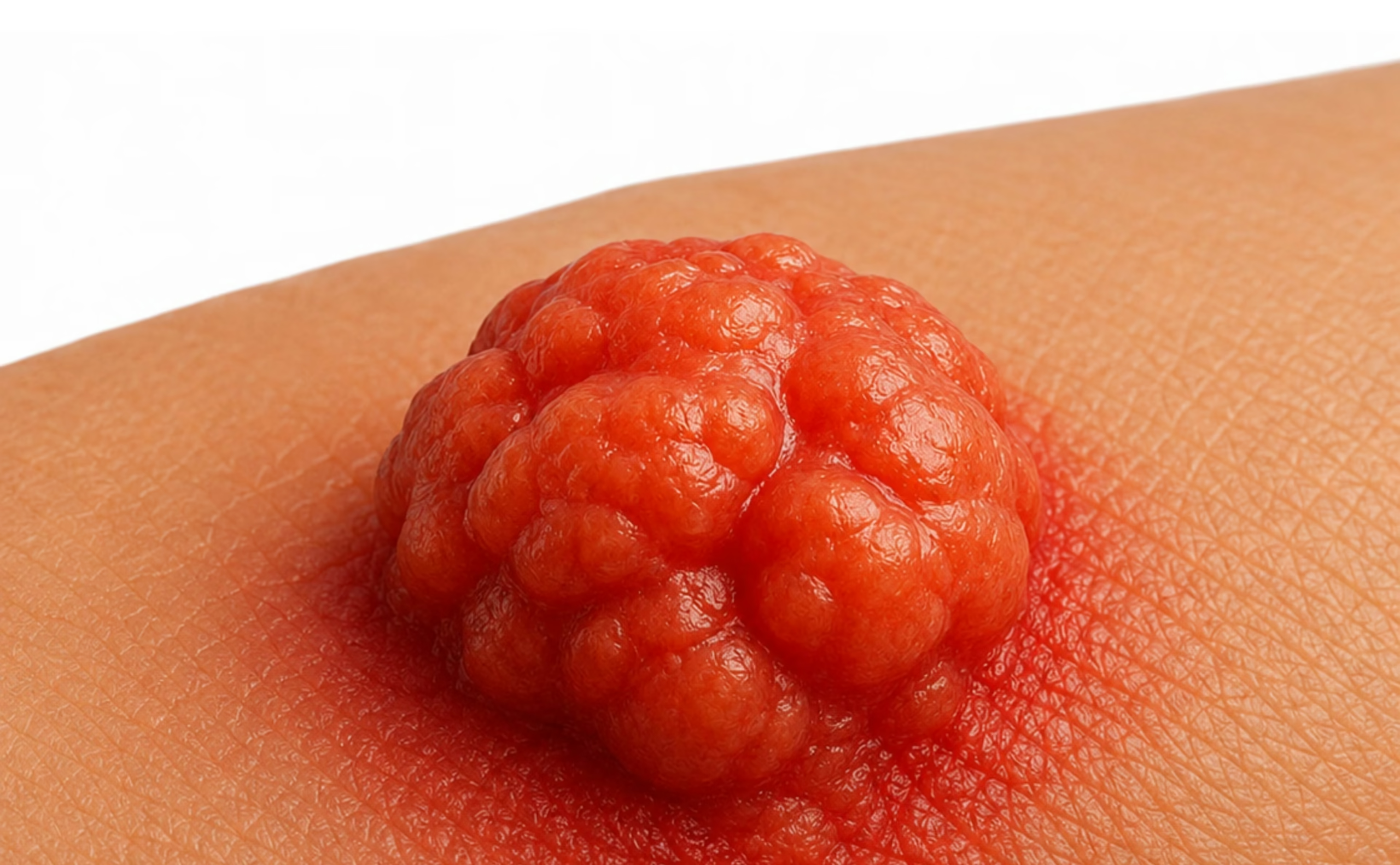
Sarcoma is a type of cancer that develops in the body’s connective tissues, the bones, muscles, cartilage, fat, blood vessels, and nerves. This is what makes it different from the more common cancers like breast, lung, or colon cancer, which develop in epithelial tissue (the lining of organs).
Because sarcomas arise from connective tissue, they can occur virtually anywhere in the body. This means diagnosis is often delayed, a lump on the arm or thigh might be dismissed as a muscle injury or benign cyst, sometimes for months, before the right tests are ordered. Many families come to a sarcoma specialist only after weeks or months of uncertainty, which is completely understandable given how rare and unfamiliar the disease is.
Sarcomas are also relatively rare, they make up only about 1% of all adult cancers, though they account for a larger proportion of childhood cancers. This rarity is precisely why specialist care matters so much.
Types of Sarcoma: Bone, Soft Tissue, and More
There are more than 70 known subtypes of sarcoma, which is part of what makes it such a complex cancer to treat. The two main categories are bone sarcomas and soft tissue sarcomas.
Bone sarcomas
These include osteosarcoma (the most common bone cancer, frequently seen in children and teenagers), Ewing sarcoma (another childhood bone cancer), and chondrosarcoma (which arises in cartilage and is more common in adults). Osteosarcoma and Ewing sarcoma together account for the majority of bone cancer diagnoses in young patients, which is why paediatric oncology experience is critical for many sarcoma families.
Soft tissue sarcomas
These can develop in muscles, fat, blood vessels, nerves, tendons, and deep skin tissues. Common types include liposarcoma, leiomyosarcoma, synovial sarcoma, and gastrointestinal stromal tumours (GIST). Each subtype behaves differently, responds to different treatments, and requires a specialist who has seen and managed that specific type before.
Why Choosing the Right Sarcoma Hospital in India Matters
Here’s something families often don’t realise until they’re already in the system: not every oncologist is equally equipped to treat sarcoma. Because it’s rare, many general oncology centres see only a handful of sarcoma cases per year. A surgeon who treats sarcoma infrequently may not have the nuanced expertise that a dedicated sarcoma team brings to every case.
Studies consistently show that patients treated at specialist sarcoma centres, particularly those with a dedicated multidisciplinary tumour board, have better outcomes. That’s not just about survival. It’s about limb preservation, quality of life, reduced rates of recurrence, and more accurate pathological diagnosis. Getting the right diagnosis and the right surgical margin the first time is crucial in sarcoma. A revision surgery or incorrect initial treatment can significantly complicate the path ahead.
In sarcoma treatment, the first surgery matters enormously. An experienced sarcoma surgeon who understands how to achieve clean margins while preserving function can make a difference that is very difficult to undo later. This is one reason choosing your treatment centre carefully at the outset is so important.
What to Look for in a Sarcoma Treatment Centre in India
When evaluating hospitals for sarcoma treatment in India, here’s what genuinely separates a strong centre from others:
- A dedicated sarcoma team: Look for a centre that has specific specialists in sarcoma, not just general oncologists, but surgeons, medical oncologists, radiation oncologists, and pathologists who regularly manage sarcoma cases.
- Multidisciplinary Tumour Board (MDT): A tumour board is where specialists from different fields review each case together before deciding on a treatment plan. This collaborative approach significantly improves the accuracy of diagnosis and the quality of the treatment plan.
- Expert pathology: Sarcoma diagnosis is genuinely difficult. Misdiagnosis is not uncommon when pathologists without sarcoma experience review specimens. Look for a centre with pathologists who are experienced specifically in sarcoma or one that sends specimens to specialist pathology labs for confirmation.
- Limb-salvage surgery expertise: In the past, many bone sarcomas required amputation. Today, experienced sarcoma surgeons can preserve the limb in a significant proportion of cases through limb-sparing surgery. Ask specifically about the centre’s experience and outcomes with limb salvage.
- Access to advanced treatments: Sarcoma treatment may involve chemotherapy, targeted therapy, immunotherapy, or clinical trials. A good centre should offer or facilitate access to the full range of treatment options, not just surgery and standard chemotherapy
- Paediatric sarcoma expertise: If the patient is a child, look specifically for a centre with a paediatric oncology team experienced in sarcoma. Children’s bodies and treatment protocols differ significantly from adults’, and the care team should be equipped for this.
- Rehabilitation and support services: Sarcoma treatment, especially surgery can significantly affect mobility, strength, and day-to-day function. A centre that offers integrated physiotherapy, rehabilitation, and psychosocial support for patients and families is one that sees beyond the tumour to the whole person.
What Does Sarcoma Treatment in India Actually Involve?
Sarcoma treatment is almost always multimodal, meaning it involves more than one type of treatment, used in combination. The specific approach depends on the sarcoma type, its location, its size and stage, and whether the patient is a child or adult.
Surgery
Surgery is the cornerstone of sarcoma treatment for most cases. The goal is to remove the tumour with clear margins, meaning no cancer cells are left behind at the edges of the removed tissue. This is where surgical expertise is critical. A sarcoma surgeon who understands the anatomy of the region, the behaviour of the specific sarcoma subtype, and how to preserve function while achieving clean margins makes a real difference in outcomes.
Chemotherapy
Chemotherapy is used in different ways depending on the sarcoma type. For bone sarcomas like osteosarcoma and Ewing sarcoma, chemotherapy is a core part of treatment, often given before surgery (neoadjuvant) to shrink the tumour, and again after surgery (adjuvant) to reduce the risk of recurrence. For many soft tissue sarcomas, chemotherapy plays a more limited role, though it is still used in specific subtypes or stages.
Radiation therapy
Radiation is used selectively in sarcoma, particularly in soft tissue sarcomas where achieving wide surgical margins is difficult. It may be given before surgery, after surgery, or as the primary treatment when surgery isn’t possible. Advanced radiation techniques like intensity-modulated radiation therapy (IMRT) or proton therapy are sometimes used to precisely target tumours while protecting surrounding healthy tissue.
Targeted therapy and immunotherapy
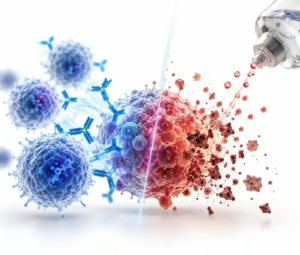
Certain sarcoma subtypes, particularly GIST, respond well to targeted therapies. Immunotherapy is an emerging area in sarcoma, and some subtypes are showing promising responses. Clinical trials are an important option to consider, especially for rarer subtypes or cases where standard treatment has not been fully effective.
A Note for Families with Children Diagnosed with Sarcoma
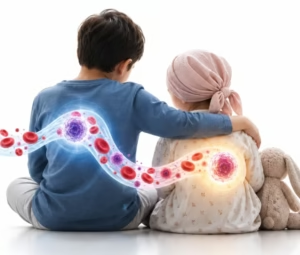
If your child has been diagnosed with sarcoma, there are a few additional things worth knowing. Sarcomas like osteosarcoma and Ewing sarcoma are unfortunately more common in children and teenagers than in adults, in fact, they’re among the most common childhood bone cancers. But the good news is that outcomes have improved significantly over the decades, and many children who receive treatment at experienced paediatric sarcoma centres go on to live full, normal lives.
Frequently Asked Questions
Sarcoma is treatable in India, and experienced sarcoma teams exist at several leading cancer centres in Mumbai and other major cities across the country. For most patients, travelling abroad is not necessary. What matters is finding a centre with genuine sarcoma expertise and those centres exist in India.
In many cases, yes. Limb-salvage surgery has become the standard approach at experienced sarcoma centres, and amputation is now far less common than it was two decades ago. The feasibility depends on the tumour's location, size, and proximity to nerves and blood vessels. An experienced sarcoma surgeon can assess this and explain your specific options.
Metastatic sarcoma, sarcoma that has spread to other parts of the body, most commonly the lungs, is more challenging but still treatable. Some patients with metastatic sarcoma respond well to chemotherapy or targeted therapy. Clinical trials are also an important consideration. Speak to a specialist about what options are available for your specific situation.
This depends on the sarcoma type and stage. For a child with osteosarcoma, the full treatment course including chemotherapy and surgery typically spans 9-12 months. Soft tissue sarcoma treatment times vary widely. Your oncologist can give you a more specific timeline based on your loved one's diagnosis and treatment plan.
Where Do You Go from Here?
If your loved one has been diagnosed with sarcoma or if you’ve received a biopsy result that’s still being evaluated, the most important thing you can do right now is move toward a specialist, a team that sees sarcoma regularly and knows its complexities intimately.
You don’t have to have everything figured out before your first consultation. Bring your reports, your scans, and your questions. Let the specialist walk you through what they’re seeing, what they recommend, and why.
Sarcoma is a serious diagnosis, but it is also one where the right expertise and the right team make a genuine, measurable difference. Take the time to find that team, and then move forward together.