31 July 2026
Table of Contents
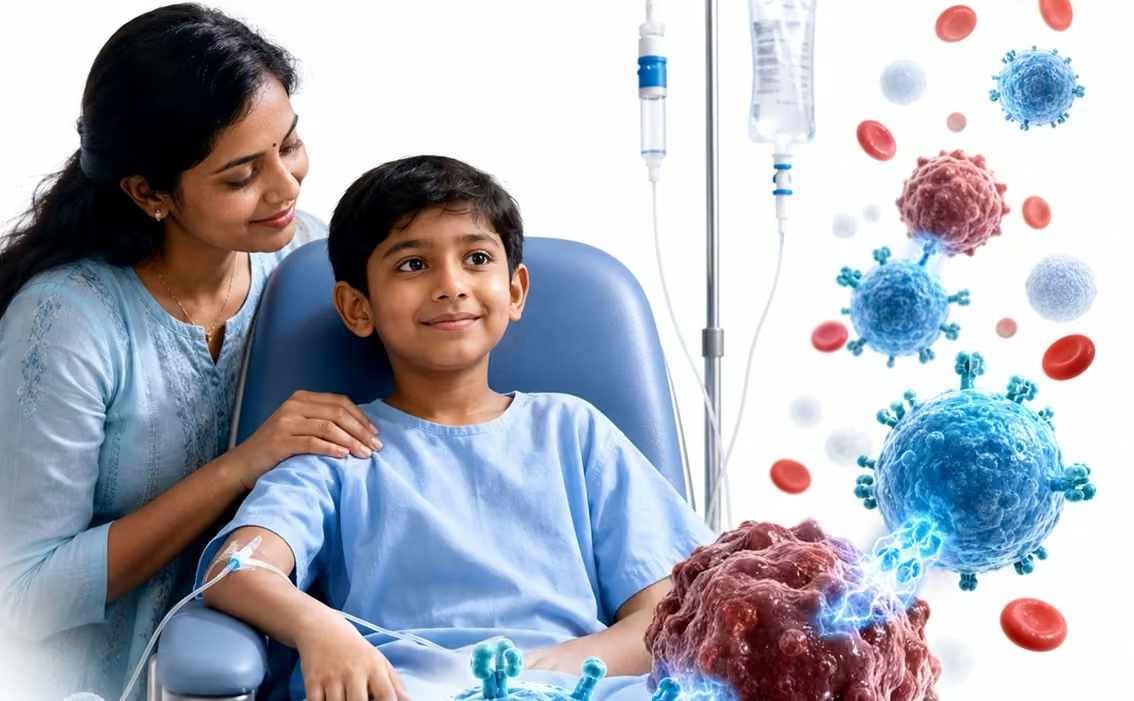
Hearing that your child has a blood cancer is one of the hardest things a parent can face. In the middle of the fear and the flood of new medical terms, here’s something reassuring and true: childhood blood cancers are among the most treatable cancers in medicine today, and the treatment options available now go well beyond what existed even a decade ago.
Let’s walk through this together. One of the most significant of these newer options is CAR T- cell therapy, a form of immunotherapy that has changed outcomes for many children with certain blood cancers. This guide is written for parents — to explain, in plain language, what CAR-T is, how it works, what the treatment journey looks like, and what questions are worth asking your child’s care team.
When Your Child Is Diagnosed: Understanding Childhood Blood Cancers
The two most common childhood blood cancers are acute lymphoblastic leukaemia (ALL) and non-Hodgkin lymphoma (NHL). Both begin in a type of white blood cell called a B-cell, which normally helps the body fight infection. In these cancers, something goes wrong in the cell’s DNA, causing it to multiply out of control.
The good news is that most children diagnosed with ALL or NHL respond well to standard chemotherapy. But for a smaller group of children, the cancer either doesn’t respond fully or returns after treatment, what doctors call relapsed or refractory disease. It’s specifically for these children that CAR-T cell therapy has become such an important option.
What Is CAR-T Cell Therapy, Explained Simply
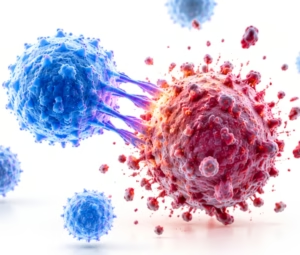
Think of your child’s immune system as having a built-in security force — T-cells — whose job is to patrol the body and destroy anything harmful. The problem with cancer cells is that they’re often very good at disguising themselves, slipping past this security force undetected.
CAR-T therapy works by taking a small sample of your child’s own T-cells and re-engineering them in a laboratory so they can recognise a specific marker, called CD19, found on the surface of most B-cell cancer cells. Once these newly “trained” cells are multiplied and given back to your child, they act like a targeted search party, seeking out and destroying cells carrying that marker.
KEY FACT
- Because CAR-T therapy uses your child’s own cells, it’s sometimes called a “living drug.” These modified cells can continue working in the body for months, providing ongoing protection against the cancer returning.
- CAR-T therapy was first approved by FDA for children, later for adults.
How Immunotherapy Differs from Chemotherapy
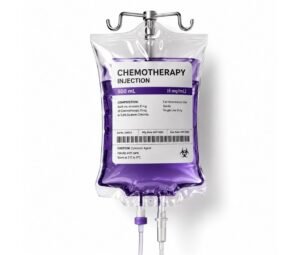
Chemotherapy works broadly, it attacks any cell in the body that divides quickly, which is why it can affect healthy tissue too, leading to side effects like hair loss or a weakened immune system. CAR-T therapy takes a more targeted approach, retraining a part of your child’s own immune system to specifically identify and attack cancer cells while leaving most healthy cells unaffected.
This doesn’t mean CAR-T therapy is without side effects of its own, it very much is a powerful treatment, but the way it works is fundamentally different, and for many children whose cancer hasn’t responded to standard chemotherapy, it offers a genuinely new avenue.
Is CAR-T Right for Your Child? Who It's Considered For
CAR-T therapy is typically considered for children with B-cell ALL or NHL whose cancer has relapsed after treatment or hasn’t responded adequately to chemotherapy. It’s a decision made carefully by your child’s paediatric hemato-oncology team, based on the specific type of cancer, prior treatments, and your child’s overall health.
Not every child will be a candidate, and that’s completely normal — the treatment does place real demands on the body during the monitoring period, so the care team will assess carefully whether it’s likely to be safe and beneficial for your specific child. This is a conversation worth having openly, with as many questions as you need to ask.
The Treatment Journey: What Your Family Can Expect
Knowing what lies ahead can make a frightening process feel more manageable. Here’s what the typical CAR-T journey looks like for a child:
- Evaluation. Your child’s care team will run tests to confirm CAR-T is an appropriate option and to check overall health and organ function.
- T-cell collection. Blood is drawn through a machine that separates out T-cells and returns the rest of the blood, an outpatient process that typically takes a few hours.
- Laboratory engineering. The collected cells are sent to a specialised facility where they’re modified to target CD19 and multiplied into the millions. This usually takes a few weeks.
- Bridging therapy. Can be chemotherapy / targeted immunotherapy to maintain remission.
- Preparatory chemotherapy. A short, low-dose course of chemotherapy is given just before the infusion to prepare the body to receive the new cells.
- The infusion. The engineered cells are given back to your child through an IV, much like a blood transfusion.
- Hospital monitoring. Your child will be closely watched in hospital for days to weeks, since this is when side effects are most likely and need prompt attention.
- Follow-up. After the initial monitoring period once the cell lines start recovering, regular follow-up visits continue to track your child’s recovery and response.
Side Effects Parents Should Know About
As with adults, CAR-T therapy in children can cause specific side effects that the care team watches for closely.
IMPORTANT
The two acute (immediate) key side effects to be aware of are cytokine release syndrome (fever, low blood pressure, flu-like symptoms) and neurological effects (confusion or difficulty speaking). Both are actively monitored for in hospital and are generally manageable with prompt treatment — this is exactly why the monitoring period matters so much.
Most side effects appear within the first couple of weeks after infusion and improve with treatment. Your child’s team will explain exactly what to watch for and when to raise a concern.
Supporting Your Child Through Treatment
Beyond the medical side, the emotional experience matters enormously — for your child and for you. Many paediatric centres offer child life specialists, play therapy, and psychological support to help children understand and cope with treatment in age-appropriate ways.
It’s also worth looking after yourself during this period. Parents supporting a child through cancer treatment often put their own needs last — connecting with other parents who’ve been through a similar experience, or accessing counselling support, can make a genuine difference to how you cope.
Frequently Asked Questions
From initial cell collection to infusion, the process usually takes 3 weeks, mostly due to the time needed to manufacture the engineered cells. Monitoring and recovery continue for some weeks after that.
Cell collection is usually outpatient. The infusion and initial monitoring period afterward typically require a hospital stay, the length of which depends on how your child responds (usually 2-4 weeks).
For many children, CAR-T therapy keeps the disease under control. Outcomes vary by individual case, and this is best discussed directly with your child's treating oncologist.
CAR-T uses your child's own genetically modified T-cells to target cancer directly. A bone marrow transplant replaces blood-forming cells, often after high-dose chemotherapy, using either the child's own cells or a donor's. They work differently and are sometimes used at different points in treatment. Best discussed by the doctor on case to case basis.
CAR-T uses your child's own genetically modified T-cells to target cancer directly. A bone marrow transplant replaces blood-forming cells, often after high-dose chemotherapy, using either the child's own cells or a donor's. They work differently and are sometimes used at different points in treatment. Best discussed by the doctor on case to case basis.
Many paediatric centres have child life specialists who use age-appropriate language and play-based tools to help children understand their treatment. It's worth asking your care team what resources are available.
In some cases, yes, depending on individual factors. This is a conversation to have with your child's hemato-oncology team if it becomes relevant.
A Final Word
Watching your child go through cancer treatment is one of the hardest experiences a parent can face, and it’s completely understandable to feel overwhelmed. What this means for you is that the treatment landscape for childhood blood cancers has advanced meaningfully — CAR-T cell therapy has given many families a genuine, less toxic and often successful path forward, even after earlier treatments haven’t worked. Especially when transplant is not feasible.