14 August 2026
Table of Contents
“Is it going to hurt?” is one of the most common questions patients ask before a bone marrow transplant and it’s a completely fair one. Here’s the honest answer: transplant is demanding, but the discomfort involved is different from what most people picture, and it’s rarely the sharp, acute pain that the word “transplant” might suggest.
Let’s walk through this together, stage by stage, so you know what patients actually report feeling, not what’s assumed or imagined and what your care team does to manage discomfort throughout.
Why This Question Comes Up So Often
The word “transplant” understandably brings surgical imagery to mind for a lot of people, incisions, anaesthesia, physical recovery from a wound. A bone marrow transplant, particularly the modern approach using stem cells collected from blood rather than bone marrow itself, is quite different from that picture.
Most of what patients experience isn’t pain in the traditional sense, but rather fatigue, nausea, and general unwellness related to the conditioning chemotherapy — similar in character to a difficult round of chemotherapy, though often more intense given the higher doses involved.
Stem Cell Collection: What It Actually Feels Like
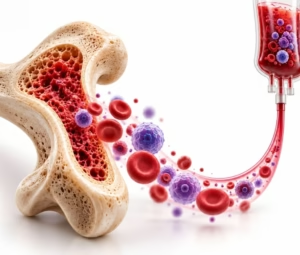
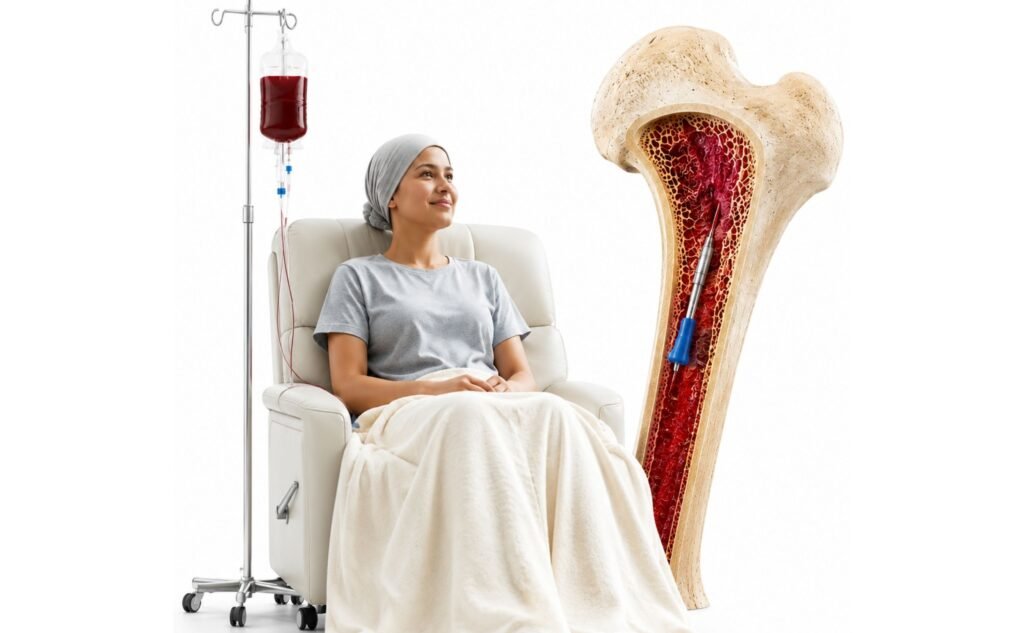
Whether cells are being collected from you (for autologous transplant) or from a donor, the modern collection method — called apheresis — involves drawing blood through a machine that separates out stem cells and returns the rest of the blood to the body. Patients typically describe this as similar to a long blood donation: some tiredness, and mild discomfort from sitting still with an IV line for a few hours, but not pain.
KEY FACT
Some patients receive a few days of injections beforehand to boost stem cell production, which can cause bone or muscle aching similar to a mild flu — uncomfortable, but temporary and manageable with simple pain relief.
Conditioning Treatment: The Hardest Part, Honestly
If there’s one stage patients consistently describe as the most physically difficult, it’s the conditioning treatment before the transplant — the high-dose chemotherapy, sometimes combined with radiation, given to prepare the body. This isn’t typically described as pain either, but as intense fatigue, nausea, mouth soreness, and a general feeling of being unwell.
Mouth and throat soreness (mucositis) is one of the more physically uncomfortable side effects some patients experience during this phase, and it’s actively managed with mouth care protocols and pain medication when needed. Your care team will talk you through what to expect and how it will be managed before conditioning begins.
The Transplant Infusion Itself
The transplant infusion — the moment often imagined as the most dramatic part of the process — is usually the least eventful, physically speaking. The stem cells are given through an IV line, much like a blood transfusion, and typically takes anywhere from under an hour to a few hours.
Some patients notice a temporary taste or smell sensation during the infusion, related to the preservative used to store the cells, and mild reactions such as flushing or a slight temperature change can occur. These are typically brief and closely monitored by the nursing team throughout.
Recovery: What Discomfort Looks Like Day to Day
The days following the infusion, while the new stem cells engraft, are when patients are generally at their most unwell — not from pain specifically, but from the cumulative effect of conditioning chemotherapy on the body: fatigue, low appetite, and vulnerability to infection while blood counts are low.
IMPORTANT
It’s genuinely normal to feel your worst in this window, roughly one to three weeks after infusion. This isn’t a sign that something has gone wrong — it reflects the expected effect of conditioning treatment, and your care team monitors closely to keep you as comfortable as possible through it.
As blood counts recover, most patients describe a gradual, steady improvement in how they feel — energy returning bit by bit rather than all at once.
What Helps Manage Discomfort Throughout
Your care team has a wide range of tools to keep you as comfortable as possible — anti-nausea medication, pain relief for mouth soreness, mouth care routines, and close attention to hydration and nutrition. It’s always worth speaking up if something is bothering you; discomfort during transplant is very manageable when it’s communicated early rather than endured quietly.
Myth vs Reality
The common myth is that transplant itself is a painful surgical-style procedure. The reality patients report is closer to a demanding stretch of intense fatigue and general unwellness — genuinely hard, but manageable, and very different from the mental image the word “transplant” can conjure.
Frequently Asked Questions
Most patients describe it as similar to a long blood donation — some tiredness and mild discomfort from the IV line, but not pain. Injections beforehand to boost cell production can cause mild bone or muscle aching.
No — it's given through an IV, much like a blood transfusion, and is generally the least physically eventful part of the whole process.
Most patients point to the conditioning chemotherapy and the days following the infusion, where fatigue, nausea, and general unwellness tend to peak — rather than any single painful event.
Not constantly, and your care team actively manages discomfort throughout with medication. Most days involve fatigue and low energy rather than acute pain.
The most demanding window is typically one to three weeks after infusion, while blood counts are at their lowest, with gradual improvement as they recover.
Yes, and it's actively offered when needed — particularly for mouth or throat soreness during conditioning. Managing discomfort promptly is a standard part of transplant care, not something to feel you need to avoid asking for.
A Final Word
It’s completely natural to worry about what a bone marrow transplant will feel like, and it’s fair to say the process is genuinely demanding. What this means for you is that the reality, as most patients describe it, is less about sharp pain and more about fatigue and general unwellness — hard, but manageable, and actively supported by your care team at every stage.
If you’re preparing for a transplant and have specific worries about pain or discomfort, raising them directly with your hemato-oncology team beforehand can help you feel more prepared for what’s genuinely ahead.