14 August 2026
Table of Contents
Lung Cancer Awareness Day, observed on August 1, provides an opportunity to look beyond the common association between smoking and lung cancer and understand why this disease can also affect people who have never smoked. Smoking remains the leading cause of lung cancer, and quitting or never starting is still one of the best things you can do for your health. But lung cancer isn’t only a smoker’s disease, an estimated 10 to 20% of cases occur in people with no smoking history at all, making lung cancer in non-smokers an important area of awareness and ongoing research.
How Does a Non-smoker Get Lung Cancer?
There’s no single answer. Several factors may play a role, including long-term exposure to air pollution, second-hand smoke, radon gas, certain workplace chemicals, and other environmental triggers. Fine particles in polluted air, known as PM2.5, are small enough to travel deep into the lungs, where they may contribute to inflammation and cellular damage over time. That said, air pollution is just one possible piece of the puzzle in many patients, doctors can’t pinpoint a single clear cause.
Not All Lung Cancer Is the Same
One of the most important things to understand is that lung cancer isn’t one single disease, it’s a group of diseases that behave very differently depending on their type and biology. The two major categories are non-small cell lung cancer (NSCLC), which is more common, and small cell lung cancer (SCLC), which is less common but tends to grow and spread faster. Within NSCLC, a subtype called adenocarcinoma is particularly common in people who have never smoked.
Doctors now also look closely at the molecular makeup of a tumour. Cancer develops when cells pick up changes in their DNA that let them grow out of control. In many non-smokers, lung cancer is driven by specific genetic alterations in genes like EGFR, ALK, ROS1, BRAF, KRAS, MET, RET, and HER2. It’s worth noting that these changes are usually acquired within the tumour over a person’s lifetime, not inherited from parents. Molecular testing helps doctors figure out whether a patient might benefit from a treatment that targets one of these specific alterations.
How Is Lung Cancer Treated?
Treatment is highly individualized, depending on the cancer’s type, stage, molecular profile, and the patient’s overall health. The main tools available today include:
- Surgery, which can remove the tumour entirely in early-stage disease and may offer long-term control or even cure.
- Radiation therapy, which uses high-energy beams to destroy cancer cells. It may be used before or after surgery, as the primary treatment when surgery isn’t an option, or to control cancer that has spread.
- Chemotherapy, which uses drugs to kill or slow down fast-dividing cancer cells. It remains an important option, often combined with other treatments.
- Targeted therapy, one of the biggest advances in recent years. When molecular testing identifies a specific alteration driving the cancer such as in EGFR, ALK, ROS1, or RET; doctors can select a drug designed to block that exact pathway. This is the essence of precision oncology: treating the tumour based on its individual biology rather than a one-size-fits-all approach.
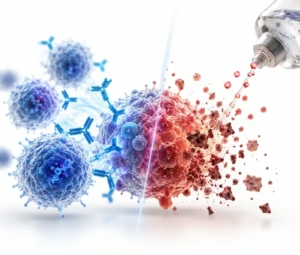
- Immunotherapy, which works differently from the others, instead of attacking cancer cells directly, it helps the body’s own immune system recognize and fight them. Drugs that target pathways like PD-1, PD-L1, or CTLA-4 are now used in appropriate patients, sometimes alone and sometimes alongside chemotherapy.
For many patients, the best results come from combining these approaches at different points in their treatment journey.
What's on the Horizon?
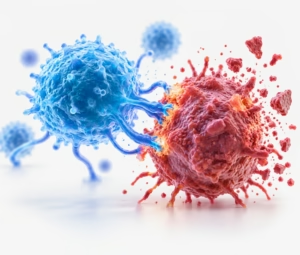
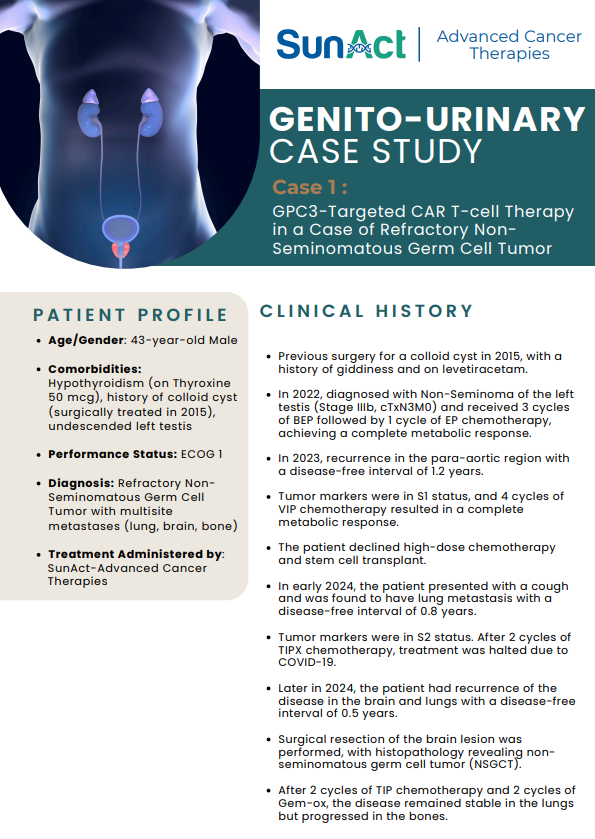
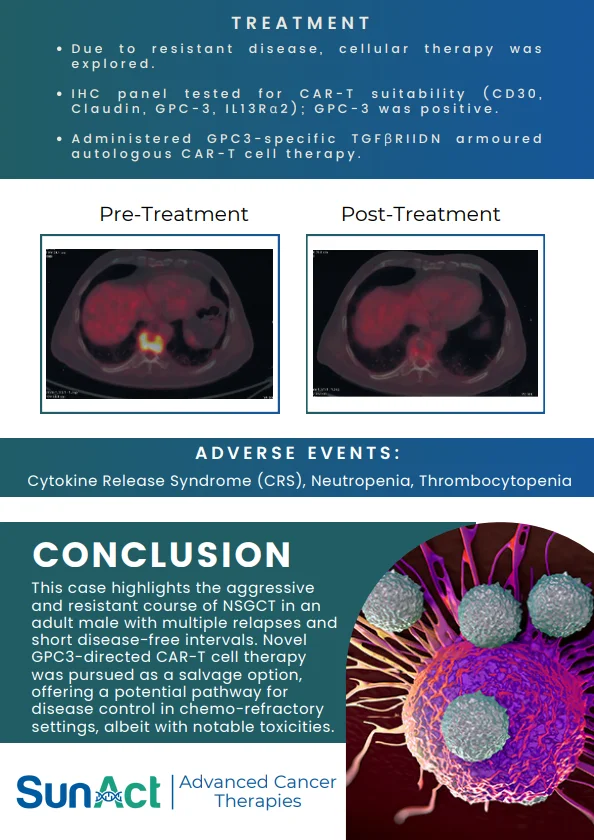
Research is moving quickly beyond these established treatments. Scientists are exploring antibody-drug conjugates, bispecific antibodies, cancer vaccines, and cellular therapies like CAR-T technology that has already transformed treatment for some blood cancers and is now being studied for solid tumors, including lung cancer.
Why Paying Attention Matters
One of the biggest challenges with lung cancer in non-smokers is that it’s often not the first thing anyone suspects. A persistent cough, breathlessness, or chest discomfort can easily be mistaken for an infection or allergies and early-stage lung cancer sometimes causes few or no symptoms at all. That’s why it’s worth taking note of symptoms like a persistent or worsening cough, coughing up blood, unexplained weight loss, ongoing chest pain, breathlessness, recurring chest infections, or unexplained fatigue. These symptoms don’t necessarily mean cancer they have many possible causes but if they persist or seem unusual for you, it’s worth getting checked out.
It’s also worth knowing that lung cancer screening isn’t recommended for everyone. It’s generally reserved for people with specific risk factors, mainly age and smoking history. If you have concerning symptoms or significant environmental or occupational exposure, talk to your doctor about your individual risk.
The Bigger Picture
Our understanding of lung cancer has changed dramatically in recent years. For people who’ve never smoked, the message isn’t one of fear it’s one of awareness. Never smoking dramatically lowers your risk of lung cancer, but it doesn’t eliminate it entirely. Understanding your risk factors, paying attention to persistent symptoms, and knowing that treatment today is more precise than ever can help ensure the right care reaches the right patient at the right time.