07 October 2026
Table of Contents
Chemotherapy and immunotherapy are often mentioned in the same breath, but they work in fundamentally different ways — and understanding that difference can make conversations with your oncologist much easier to follow. Here’s the honest answer: chemotherapy attacks cancer cells directly, while immunotherapy works by helping your own immune system do the attacking.
Let’s walk through this together. This guide breaks down how each treatment works, what to expect from each, and how doctors decide which one — or which combination — makes sense for a given diagnosis.

The Core Difference in How They Work
Chemotherapy works by damaging or destroying rapidly dividing cells. Since cancer cells divide quickly, chemotherapy is effective at killing them — but it can’t fully distinguish between cancerous and healthy fast-dividing cells, such as those in hair follicles or the digestive tract, which is why side effects like hair loss and nausea occur.
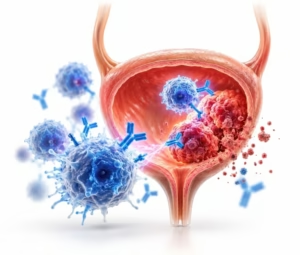
Immunotherapy works differently, by helping your immune system recognise and attack cancer cells itself. Many cancers develop ways to hide from the immune system; immunotherapy drugs remove that camouflage, or boost immune activity, so your own T-cells can identify and destroy the cancer.
How Each Treatment Is Given
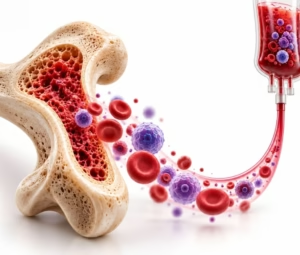
Both treatments are most commonly given through an IV infusion, but the schedules and settings often differ. Chemotherapy is typically given in cycles — a period of treatment followed by a rest period to allow the body to recover — often over several months.
Immunotherapy is usually given on an outpatient basis as well, often every few weeks, and treatment courses can run for many months to over a year, depending on response and the specific drug used.
KEY FACT
Chemotherapy cycles include planned rest periods because the treatment affects healthy dividing cells too, which need time to recover. Immunotherapy doesn’t require the same kind of recovery break, since it doesn’t work by directly damaging cells.
Side Effects: Why They Look So Different
Because the two treatments work through entirely different mechanisms, their side effect profiles are quite distinct.
Chemotherapy’s side effects — hair loss, nausea, fatigue, low blood counts — stem from its impact on any fast-dividing cell in the body, healthy or not. Immunotherapy’s side effects come from an overactivated immune system, and can include fatigue, skin rash, and, less commonly, inflammation of organs like the thyroid, lungs, or intestines.
IMPORTANT
Immunotherapy side effects can appear at any point during treatment, including months in, and sometimes even after treatment ends. Reporting new symptoms promptly — even ones that seem minor — allows your care team to manage them early.
When Each Treatment Is Typically Used
Chemotherapy remains the standard first treatment for a very wide range of cancers, given its decades of established evidence across nearly every cancer type. Immunotherapy has a strong and growing role, especially for melanoma, certain lung cancers, some kidney cancers, and select cases of recurrent or advanced disease in other cancer types — sometimes as a first treatment, sometimes after other options.
Can They Be Used Together?
Yes — combining chemotherapy and immunotherapy has become increasingly common for certain cancers, based on evidence that the combination can outperform either treatment alone in specific situations. Chemotherapy can sometimes help expose cancer cells more clearly to the immune system, making the immunotherapy component more effective.
This isn’t appropriate for every diagnosis, and your oncologist will base the decision on your specific cancer type, stage, and overall health.
How Your Care Team Chooses Between Them
The decision comes down to several factors: your specific cancer type and stage, results of any biomarker testing (such as PD-L1 expression for immunotherapy candidacy), your overall health and organ function, and the strength of clinical evidence supporting each option for your exact diagnosis.
This is always an individualised decision. It’s worth asking your oncologist directly why a particular treatment, or combination, is being recommended in your case, and what the alternatives would have looked like.
Frequently Asked Questions
Often, but not universally — this depends on the individual and the specific drugs involved. Many patients tolerate immunotherapy well, but it isn't free of side effects, and some immune-related reactions can be serious if not caught early.
No. Immunotherapy has strong evidence for specific cancer types and is less established or less effective for others. Your oncologist can tell you whether it's a relevant option for your specific diagnosis.
Often yes — immunotherapy is frequently used after chemotherapy, particularly for recurrent or advanced disease. Whether it's appropriate depends on your specific situation.
Hair loss happens because chemotherapy affects fast-dividing cells generally, including hair follicles. Immunotherapy doesn't work by damaging dividing cells, so hair loss is not a typical side effect.
Chemotherapy is often given over a defined number of cycles, commonly a few months. Immunotherapy courses tend to run longer, sometimes a year or more, depending on response and specific protocol.
It's always worth discussing your preferences with your oncologist, but the choice needs to be guided by what the evidence supports for your specific cancer type — not every diagnosis has an equally effective immunotherapy alternative to chemotherapy.
A Final Word
Understanding the difference between chemotherapy and immunotherapy can make it much easier to follow your own treatment conversations and ask informed questions. What this means for you is that neither treatment is universally “better” — the right choice, or combination, depends entirely on your specific cancer and circumstances.
If you’d like to understand which approach, or combination, makes sense for your diagnosis, speaking with a medical oncologist is the clearest way to get an answer tailored to your situation.