25 August 2026
Table of Contents
If you or someone you love has been living with non-Hodgkin lymphoma (NHL) or acute lymphoblastic leukemia (ALL) that hasn’t responded the way you hoped, you’ve likely already been through a lot — rounds of chemotherapy, difficult conversations, and the exhausting uncertainty of “what next.” Here’s the honest answer: for many patients in this exact situation, there is a next step, and it’s one of the most significant advances in cancer treatment in the last decade.
If you or someone you love has been living with non-Hodgkin lymphoma (NHL) or acute lymphoblastic leukemia (ALL) that hasn’t responded the way you hoped, you’ve likely already been through a lot — rounds of chemotherapy, difficult conversations, and the exhausting uncertainty of “what next.” Here’s the honest answer: for many patients in this exact situation, there is a next step, and it’s one of the most significant advances in cancer treatment in the last decade.
Understanding B-Cell Malignancies: NHL and ALL
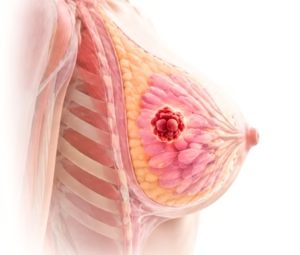
Non-Hodgkin lymphoma and acute lymphoblastic leukemia are both cancers that start in a type of white blood cell called a B-cell. Normally, B-cells help your body fight infection by producing antibodies. In these cancers, something goes wrong in the DNA of a B-cell, causing it to multiply uncontrollably instead of doing its normal job.
The two conditions behave differently. NHL typically forms tumours in lymph nodes or other tissue, while ALL usually shows up as an overwhelming number of abnormal cells circulating in the blood and bone marrow. Despite these differences, both are considered B-cell malignancies, and both can, in certain cases, be treated using the same CAR-T approach — because both types of cancer cells tend to carry a shared marker called CD19 on their surface.
Most patients are first treated with standard chemotherapy, sometimes combined with other drugs or radiation. For many people, this works well. But for a subset of patients, the cancer either doesn’t fully respond or comes back later — what doctors call “relapsed or refractory” disease. This is where CAR T therapy has become especially important.
Where CAR T Fits in the Treatment Picture
CAR T-cell therapy isn’t typically the first treatment offered. It’s generally considered when standard treatments — chemotherapy, targeted drugs, or in some cases a bone marrow transplant — haven’t produced a lasting response. Think of it less as a replacement for existing treatment and more as a powerful option that opens up when other doors have closed.
KEY FACT
CAR T-cell therapy was specifically developed for patients whose B-cell cancers relapsed or stopped responding to standard treatment. It has given many of these patients a realistic path back to remission where few options previously existed.
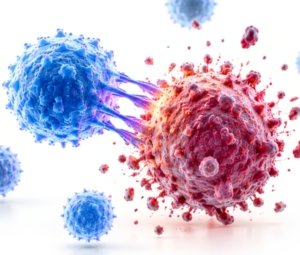
What makes it different from chemotherapy is the underlying approach. Chemotherapy attacks any fast-dividing cell in the body, cancerous or not, which is part of why side effects like hair loss and low blood counts happen. CAR-T therapy instead retrains a part of the immune system to specifically recognise and destroy the cancer cells — leaving most healthy cells alone.
How CAR T-cell Therapy Works
CAR T stands for Chimeric Antigen Receptor T-cell therapy. T-cells are a category of white blood cell whose job is to identify and destroy threats to the body — including, in theory, cancer cells. The problem is that cancer cells are often good at hiding from the immune system, blending in enough that T-cells pass right by them.
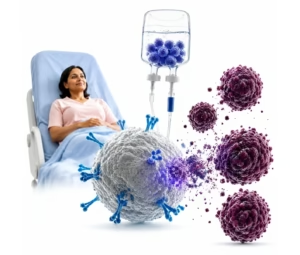
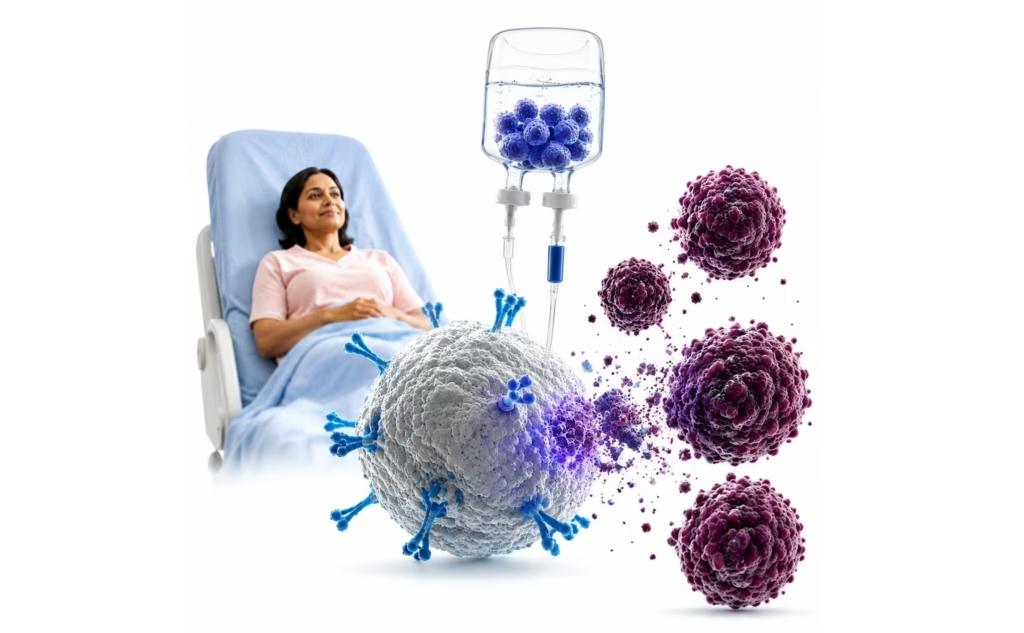
CAR T therapy solves this by genetically modifying a patient’s own T-cells in a laboratory, adding a new receptor on their surface. This receptor is engineered to recognise CD19, the marker found on most B-cell cancer cells. Once these modified cells are multiplied into the millions and infused back into the patient, they act like a targeted search-and-destroy force, seeking out and eliminating cells carrying that marker.
Because the treatment uses the patient’s own cells, it’s sometimes described as a “living drug.” Unlike a one-time dose of medication, these modified T-cells can continue multiplying and, in some patients, remain present in the body for months or longer — providing ongoing surveillance against the cancer.
The CAR T Treatment Journey, Step by Step
Understanding the process ahead can make it feel far less overwhelming. Here’s what the typical CAR T journey looks like:
- T-cell collection (apheresis). Blood is drawn through a machine that separates out T-cells and returns the rest of the blood to the body. This outpatient procedure usually takes a few hours and isn’t painful, though it can be tiring.
- Cell engineering in the lab. The collected T-cells are sent to a specialised manufacturing facility, where they’re genetically modified to carry the new CD19-targeting receptor and multiplied into the millions. This step generally takes a few weeks.
- Bridging therapy, if needed. While the CAR T cells are being manufactured, some patients receive additional treatment to help keep the cancer under control in the meantime.
- Lymphodepleting chemotherapy. A short course of low-dose chemotherapy is given just before the infusion. This isn’t meant to treat the cancer directly — it clears space for the new CAR T-cells to expand effectively once infused.
- The infusion. The engineered CAR T-cells are returned to the patient through an IV, similar to a blood transfusion. The infusion itself is typically quick.
- Close monitoring. Patients are closely observed in hospital for a period of days to weeks, as this is when side effects are most likely to occur and need prompt management.
- Follow-up and recovery. After the initial monitoring period, patients continue with scheduled follow-up visits to track the cancer’s response and watch for any longer-term effects.
Who Is a Candidate for CAR T Therapy?
CAR T therapy is generally considered for patients with B-cell NHL or ALL whose cancer has relapsed after treatment or hasn’t responded adequately to standard chemotherapy. It’s a decision made carefully, in consultation with a hemato-oncology team, taking into account the specific subtype of cancer, prior treatments received, overall health, and organ function.
Not every patient is automatically eligible — the treatment does place demands on the body, particularly during the monitoring period, so your care team will assess whether you’re likely to tolerate the process safely. This is a conversation worth having directly with a specialist who knows your full medical history.
What to Expect: Side Effects and Recovery
CAR T therapy is a powerful treatment, and like most powerful treatments, it comes with side effects worth understanding in advance rather than being surprised by later.
IMPORTANT
The two most significant side effects to know about are cytokine release syndrome (CRS) and neurological effects. Both are closely monitored for and are manageable with prompt treatment — which is exactly why the hospital monitoring period after infusion matters so much.
Cytokine release syndrome happens when the newly active immune cells release a flood of signalling proteins into the bloodstream, which can cause fever, low blood pressure, and flu-like symptoms. Neurological effects can include confusion, difficulty speaking, or, less commonly, more serious symptoms — these are usually temporary and reversible with treatment. Because both of these can develop quickly, patients typically stay near the treatment centre for a period of weeks even after being discharged from hospital.
Beyond the acute period, recovery varies from person to person. Some patients feel a return to normal energy within weeks; for others, it takes longer. Your care team will guide you through what to expect at each stage.
How CAR T Compares to Other Treatments
Treatment | How it works | Typically considered when |
Chemotherapy | Attacks fast-dividing cells throughout the body | First-line treatment for most patients |
CAR T-cell therapy | Reprogrammes the patient’s own T-cells to target CD19-carrying cancer cells | Relapsed or refractory disease after standard treatment |
Bone marrow transplant | Replaces the patient’s blood-forming cells, often after intensive chemotherapy | Certain relapsed cases, or as consolidation after remission |
These approaches aren’t always either-or; some patients go through more than one over the course of their treatment journey. Your oncology team will help map out which sequence makes sense for your specific diagnosis.
CAR T-cell therapy is now available in India, including indigenously developed options, giving more patients access to this treatment closer to home.
Frequently Asked Questions
From the initial T-cell collection to the infusion, the process usually takes several weeks, largely due to the time needed to manufacture the engineered cells. Recovery and monitoring continue for some weeks after that.
For some patients, CAR T therapy leads to long-term remission. For others, it extends the time the cancer stays under control. Outcomes vary by individual, and this is best discussed directly with your treating oncologist based on your specific case.
The T-cell collection is usually outpatient. The infusion and the initial monitoring period afterward typically require a hospital stay, the length of which depends on how you respond.
In some cases, yes, though this depends on multiple individual factors. This is a conversation to have with your hemato-oncology team if it becomes relevant.
CAR-T uses your own genetically modified T-cells to target the cancer directly. A bone marrow transplant replaces your blood-forming cells, often after high-dose chemotherapy, and can come from your own cells or a donor. They work differently and are sometimes used at different points in treatment.
Most side effects occur in the weeks following infusion, but your care team will schedule ongoing follow-up to monitor blood counts, immune function, and overall recovery over the longer term.
A Final Word
Most side effects occur in the weeks following infusion, but your care team will schedule ongoing follow-up to monitor blood counts, immune function, and overall recovery over the longer term.