19 August 2026
Table of Contents
If your oncologist has recommended chemotherapy and immunotherapy together, it’s natural to wonder why doesn’t combining two treatments simply mean double the side effects? Here’s the honest answer: for a meaningful number of cancers, combining these two treatments has been shown to work better than either one alone, and the reasoning behind it is more logical than it might first appear.
Let’s walk through this together. This guide explains why doctors sometimes reach for chemotherapy and immunotherapy together, what the evidence behind this approach looks like, and what it actually means for your treatment experience.
Why Combine Two Different Treatments?
Cancer is complex, and a single treatment approach doesn’t always address every angle of how a tumour grows, spreads, and evades the body’s own defences. Combination treatment isn’t a sign that the cancer is somehow “worse” it’s a considered strategy based on how these two treatments complement each other.
The idea has been studied extensively in clinical trials across many cancer types, and for several of them, the evidence now supports combination treatment as a standard approach rather than an experimental one.
How Chemotherapy and Immunotherapy Work Differently
Chemotherapy works broadly, attacking cells that divide quickly, which includes cancer cells, but also some healthy cells, which is why side effects like hair loss and fatigue are common. It directly damages cancer cells’ ability to grow and divide.
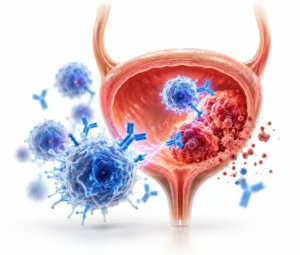
Immunotherapy takes an entirely different route. Rather than attacking cancer cells directly, it helps the immune system recognise and respond to cancer cells that have been evading detection, often by blocking the biological “off switch” cancer cells use to hide from T-cells.
KEY FACT
Because chemotherapy and immunotherapy work through different mechanisms, using them together allows doctors to attack the cancer directly while also switching the immune system back on, two distinct lines of attack rather than one stronger version of the same approach.
The Science Behind Combining Them
There’s a specific reason this combination often works better than either treatment alone: chemotherapy, in addition to killing cancer cells directly, can also cause dying cancer cells to release markers that make the tumour more visible to the immune system. This can make the immunotherapy component more effective than it would be on its own.
Chemotherapy can also help reduce some of the cancer’s defences against immune attack, creating conditions where the reactivated immune response from immunotherapy has a better chance of succeeding. This complementary relationship is a large part of why the combination has shown benefit in clinical trials for several cancer types.
Which Cancers Commonly Use This Combination
Combination chemotherapy and immunotherapy is now standard treatment for several cancer types, including certain lung cancers, some head and neck cancers, and specific gynaecologic cancers, among others. It’s typically used for advanced or metastatic disease, though its use in earlier-stage disease is expanding as more trial evidence emerges.
Whether this combination is appropriate for your specific cancer depends on the type, stage, and specific biological features of your tumour, this is always assessed individually by your oncology team.
What Combination Treatment Involves
In practice, combination treatment usually means receiving both drugs during the same treatment cycle, typically as sequential IV infusions on the same day, spaced a few weeks apart. Here’s the general shape of the process:
- Assessment and testing. Your oncology team evaluates your cancer type, stage, and relevant biomarkers to confirm combination treatment is appropriate.
- Chemotherapy administration. Chemotherapy is given first, typically as an IV infusion, following an established dosing schedule for your cancer type.
- Immunotherapy administration. Immunotherapy is given during the same visit or cycle, working alongside the chemotherapy’s effects.
- Ongoing monitoring. Regular scans and blood tests track how the combination is working and screen for side effects from either treatment.
Side Effects: What Changes When Treatments Are Combined
Combining treatments does mean you may experience side effects from both, the fatigue, nausea, and blood count changes associated with chemotherapy, alongside the immune-related side effects, such as rash or fatigue, associated with immunotherapy.
IMPORTANT
Side effects from combination treatment aren’t simply doubled, but they do require careful monitoring, since immune-related side effects can sometimes be harder to distinguish from chemotherapy side effects. Your care team will track both closely and adjust treatment if needed.
Most patients tolerate combination treatment reasonably well, particularly with proactive symptom management. Your oncologist will walk you through exactly what to expect for your specific treatment plan.
Frequently Asked Questions
Not necessarily. Combination treatment is a standard, evidence-based approach for several cancer types and stages, it reflects what the evidence shows works best for your specific diagnosis, not necessarily a marker of severity.
You may experience side effects related to both treatments, but they aren't simply additive, and your care team actively manages and monitors for them throughout.
The decision is based on your specific cancer type, stage, biomarkers, and the evidence from clinical trials for your particular diagnosis, weighed against your overall health.
Often, yes chemotherapy and immunotherapy are frequently given during the same treatment visit, one after the other, following your specific treatment protocol.
Yes, your oncology team can adjust dosing or timing of either component if side effects need to be managed more closely, always aiming to keep treatment as effective and tolerable as possible.
No, its use depends on specific evidence for each cancer type and stage. Your oncologist will explain whether combination treatment has demonstrated benefit for your specific diagnosis.
A Final Word
Being told you’ll receive two treatments together can raise as many questions as it answers, and that’s completely understandable. What this means for you is that combination treatment reflects a deliberate, evidence-based strategy using two different mechanisms together because, for many cancers, the research shows this genuinely improves outcomes compared with either treatment alone.
If combination therapy has been recommended as part of your treatment plan, speaking with your oncologist about the specific evidence behind it for your cancer type can help you feel more confident and informed about the path ahead.