14 July 2026
Table of Contents
If your doctor has mentioned a bone marrow transplant as part of your treatment plan, it’s completely natural to have questions — and maybe a bit of apprehension. Here’s the honest answer: a bone marrow transplant sounds more daunting than it often turns out to be, and understanding the two main types can make the whole conversation with your care team much clearer.
Let’s walk through this together. Both autologous and allogeneic transplants share the same basic goal — replacing damaged or diseased bone marrow with healthy, blood-forming stem cells — but they differ in an important way: whose cells are used. This guide explains both approaches, how doctors decide between them, and what the treatment journey generally looks like.
What Is a Bone Marrow Transplant?
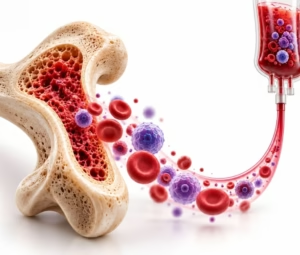
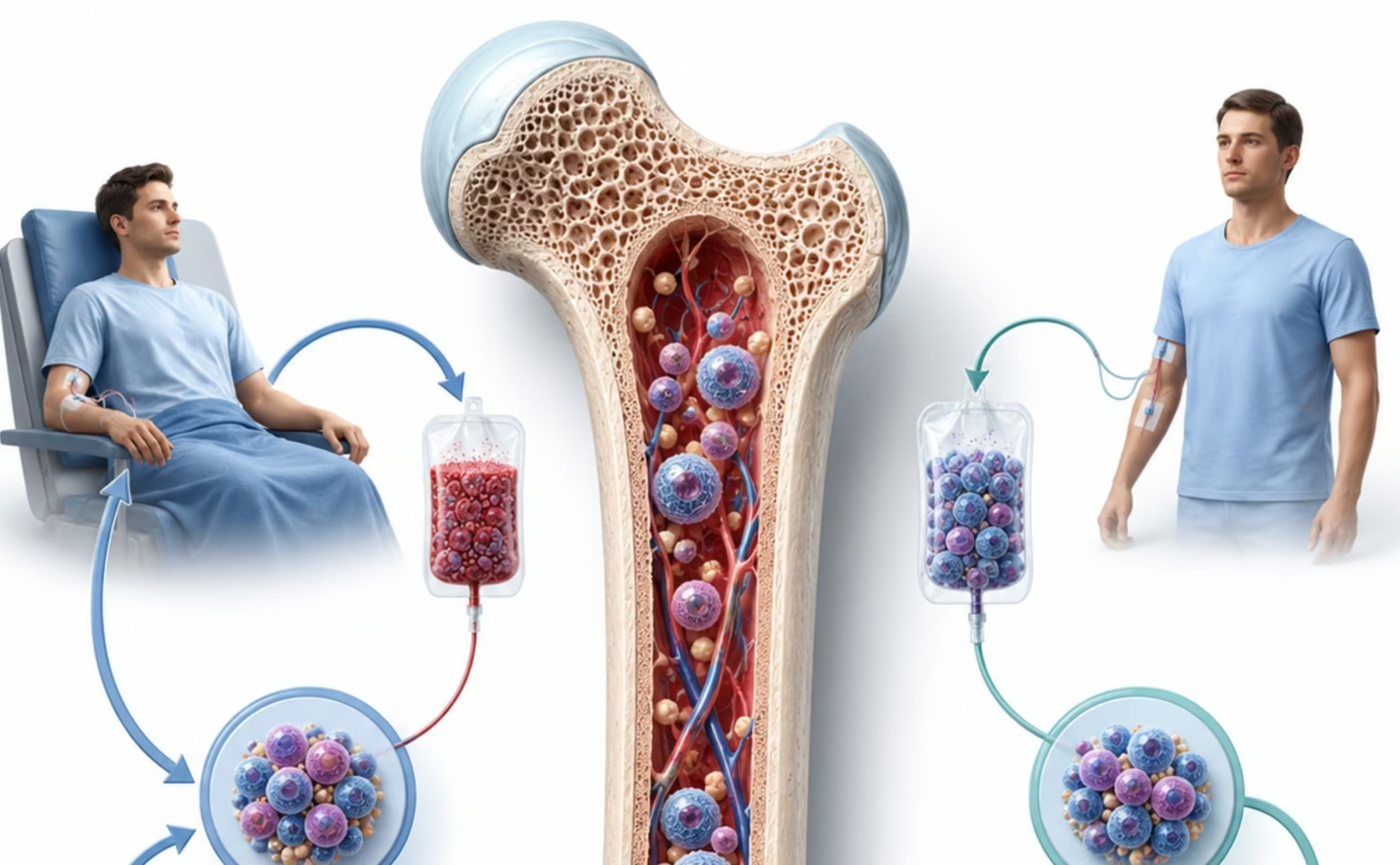
Bone marrow is the spongy tissue inside your bones responsible for producing blood cells — red cells that carry oxygen, white cells that fight infection, and platelets that help blood clot. In many blood cancers, such as leukemia, lymphoma, and multiple myeloma, this marrow either produces abnormal cells or gets damaged by the high-dose treatment needed to eliminate the cancer.
A bone marrow transplant, sometimes called a stem cell transplant, replaces this damaged marrow with healthy stem cells capable of rebuilding a normal blood and immune system. The two main types differ in the source of these replacement cells.
KEY FACT
“Bone marrow transplant” and “stem cell transplant” are generally used interchangeably today, since most transplants now collect stem cells from the bloodstream rather than directly from bone marrow.
Autologous Transplant: Using Your Own Cells
In an autologous transplant, your own stem cells are collected and stored before you receive high-dose chemotherapy. The intense chemotherapy is needed to eliminate cancer cells as thoroughly as possible, but it also destroys your bone marrow’s ability to produce blood cells. Your own previously collected stem cells are then given back to you, allowing your marrow to recover and start producing healthy blood cells again.
Because the cells come from your own body, there’s no risk of your immune system rejecting them, and no need to search for a matching donor. This makes autologous transplant a more straightforward option logistically, and it’s commonly used for conditions like multiple myeloma and certain lymphomas.
Allogeneic Transplant: Using a Donor's Cells
In an allogeneic transplant, the healthy stem cells come from another person — a donor whose tissue type closely matches yours. This could be a sibling, another relative, or an unrelated donor identified through a donor registry.
This approach carries a unique advantage: the donor’s immune cells can recognise and attack any remaining cancer cells in your body, an effect known as “graft-versus-tumour.” This is a benefit autologous transplants don’t offer, since your own immune system was already unable to eliminate the cancer on its own.
IMPORTANT
The same donor immune cells that help fight remaining cancer can sometimes also attack healthy tissue in the recipient’s body — a condition called graft-versus-host disease (GVHD). This is closely monitored for and managed with medication throughout recovery.
Allogeneic transplants are typically used for conditions like acute leukemias, where using the patient’s own cells wouldn’t provide the same benefit, or where the marrow itself is affected by the disease.
Autologous vs Allogeneic: A Side-by-Side Look
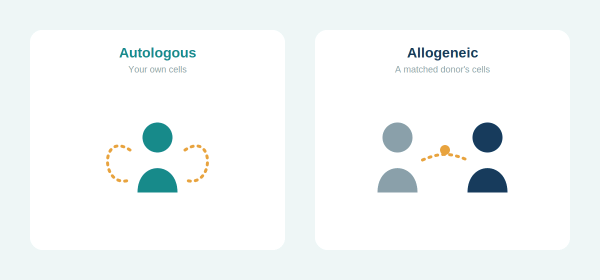
Autologous transplant uses the patient’s own cells; allogeneic transplant uses cells from a matched donor.
| Autologous Transplant | Allogeneic Transplant |
Cell source | Patient’s own stem cells | A matched donor’s stem cells |
Rejection risk | None | Possible, managed with medication |
Graft-versus-tumour effect | Not present | Present — donor cells can attack remaining cancer |
Risk of GVHD | None | Present, requires monitoring |
Donor matching required | No | Yes |
Commonly used for | Multiple myeloma, certain lymphomas | Acute leukemias, some high-risk cases |
How Doctors Decide Which Type Is Right for You
The choice between autologous and allogeneic transplant depends on several factors: the specific type of cancer you have, whether your bone marrow itself is affected by disease, your overall health, and, for allogeneic transplant, whether a suitably matched donor is available.
This decision is made by your hemato-oncology team based on your complete medical picture. It’s a conversation worth having openly with your doctor — ask what factors are guiding the recommendation in your specific case, and what the expected benefits and risks look like for you.
The Transplant Process, Step by Step
While the details vary between autologous and allogeneic transplants, the overall journey follows a similar structure:
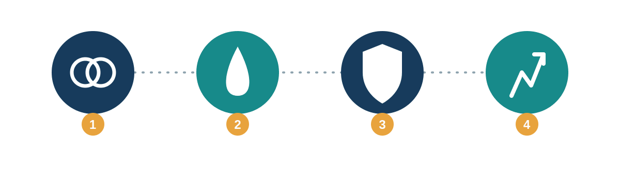
The general bone marrow transplant journey: matching and preparation, collection, conditioning and infusion, and engraftment.
- Evaluation and preparation. Your care team assesses your overall health, organ function, and — for allogeneic transplant — searches for a suitable donor match.
- Stem cell collection. For autologous transplant, your own cells are collected in advance and frozen. For allogeneic transplant, cells are collected from the donor, often shortly before the transplant.
- Conditioning treatment. You receive high-dose chemotherapy, sometimes with radiation, to eliminate cancer cells and prepare your body to receive the new stem cells.
- The transplant infusion. The stem cells are given through an IV, similar to a blood transfusion. The infusion itself is usually straightforward.
- Engraftment period. Over the following weeks, the new stem cells travel to the bone marrow and begin producing new blood cells — a process called engraftment.
- Close hospital monitoring. During this period, your immune system is very weak, so you’ll be closely monitored for infection and, in allogeneic transplants, signs of GVHD.
- Recovery and follow-up. As blood counts recover, monitoring continues on an outpatient basis, with the timeline varying by transplant type and individual response.
What to Expect During Recovery
Recovery timelines differ between the two transplant types. Autologous transplant recovery is often somewhat shorter, since there’s no donor immune system to manage. Allogeneic transplant recovery tends to take longer, with medication to prevent or manage GVHD continuing for months, and closer monitoring of immune function throughout that period.
In both cases, the weeks immediately following transplant are the most demanding, with a higher risk of infection while blood counts are low. Most patients see gradual improvement over the following months, though full immune recovery — especially after allogeneic transplant — can take up to a year or longer.
Frequently Asked Questions
Neither is universally "better" — the right choice depends on your specific diagnosis and circumstances. Your hemato-oncology team will recommend the type most likely to benefit your particular case.
Doctors typically look first at siblings, since they have the highest chance of a close tissue match, before searching unrelated donor registries if needed.
Largely, yes — the terms are used interchangeably today, since most transplants collect stem cells from the bloodstream rather than the bone marrow itself.
This varies considerably by transplant type and individual case, but the process from preparation through initial recovery typically spans several weeks to a few months, with follow-up continuing well beyond that.
GVHD occurs when donor immune cells attack healthy tissue in the recipient's body. It ranges from mild to more serious, and is actively monitored for and managed with medication throughout allogeneic transplant recovery.
In some circumstances, yes, depending on the disease and how the first transplant went. This would be a specific conversation to have with your treating team if it becomes relevant.
A Final Word
Facing the prospect of a bone marrow transplant, of either type, can feel like a lot to take in at once. What this means for you is that both approaches represent well-established, carefully refined treatments that have helped countless patients return to health after difficult diagnoses and your care team’s recommendation will be built specifically around what gives you the best chance of a good outcome.
If a bone marrow transplant has come up as part of your treatment discussion, speaking with a hemato-oncology specialist can help you understand which type may be appropriate for your situation and what the process would involve for you specifically.